

Glasses Frame Fit & Size Guide: How to Find Your Most Comfortable Pair
A great pair of glasses shouldn’t pinch your nose, slide down your face, or press against your temples. This glasses frame size guide covers everything that shapes a comfortable fit—from millimeter measurements to bridge designs, nose pads, and hinges.
Start with your frame size, check how the frame rests on your nose and ears, then learn what a small adjustment can fix. Whether you’re choosing your first Vooglam pair or replacing glasses that never felt quite right, here’s what to check before you buy.
What Actually Impacts Glasses Fit?
Comfort comes from three things working together. Matching your old size numbers helps, but the frame’s construction and final adjustments matter too.
| Fit Factor | What to Check | Why It Matters |
|---|---|---|
| Dimensional fit | Frame width, lens width and height, bridge width, temple length | Determines whether the frame has enough room for your head and sits in a suitable position. |
| Structural fit | Bridge shape, nose pads, rims, hinges | Affects where the weight rests and how securely the frame stays in place. |
| Post-purchase fit | Adjustable pads, temple alignment, ear bends | Helps fine-tune a suitable frame to your nose and ears. |
Quick fit check: Look straight ahead, turn your head, then smile. The frame should stay level without squeezing, slipping, or lifting against your cheeks.
Dimensional Fit: How to Know Your Glasses Size
Where to Find the Numbers on Your Current Glasses
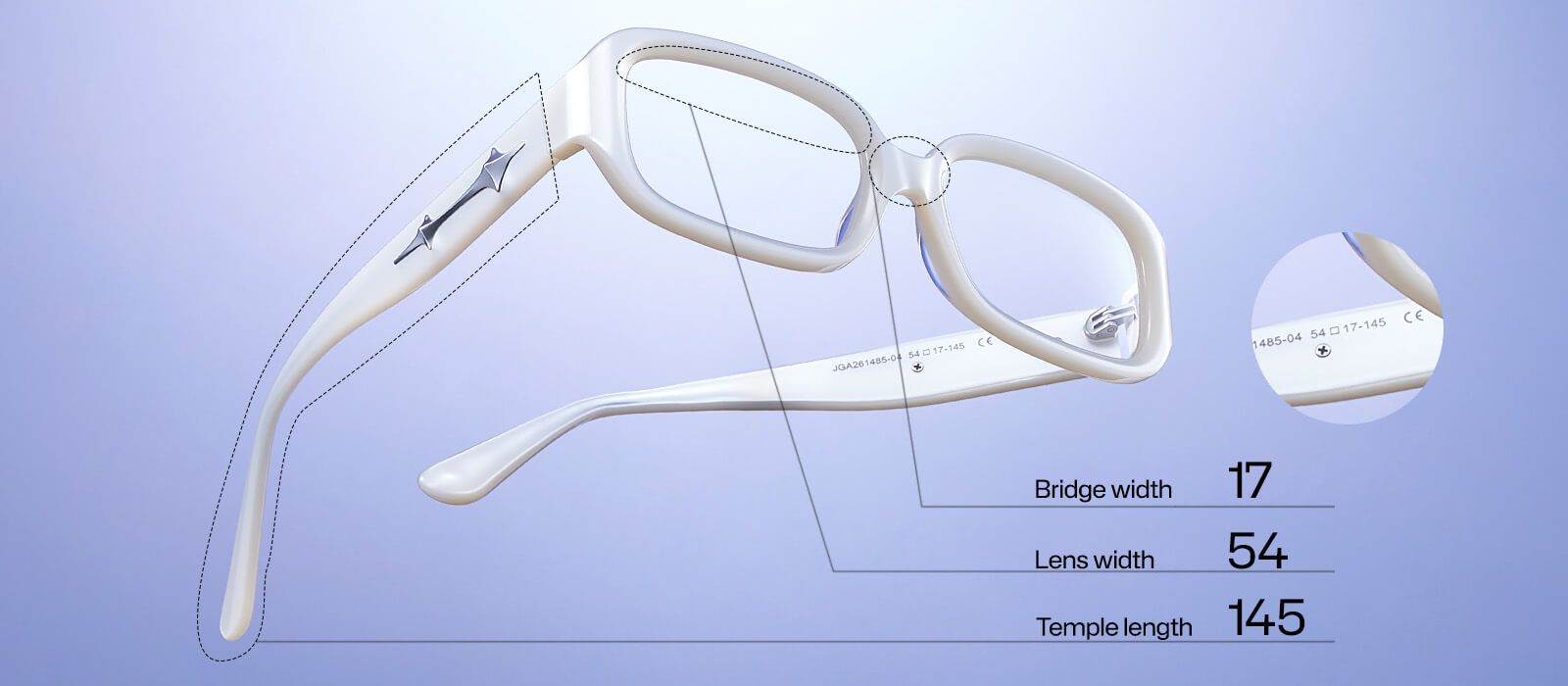
Check inside either temple arm for a sequence such as 52 □ 18–140. These measurements are in millimeters:
- 52: Lens width—the horizontal width of one lens.
- 18: Bridge width—the distance between the lenses.
- 140: Temple length—the arm’s length from hinge to tip, following its bend.
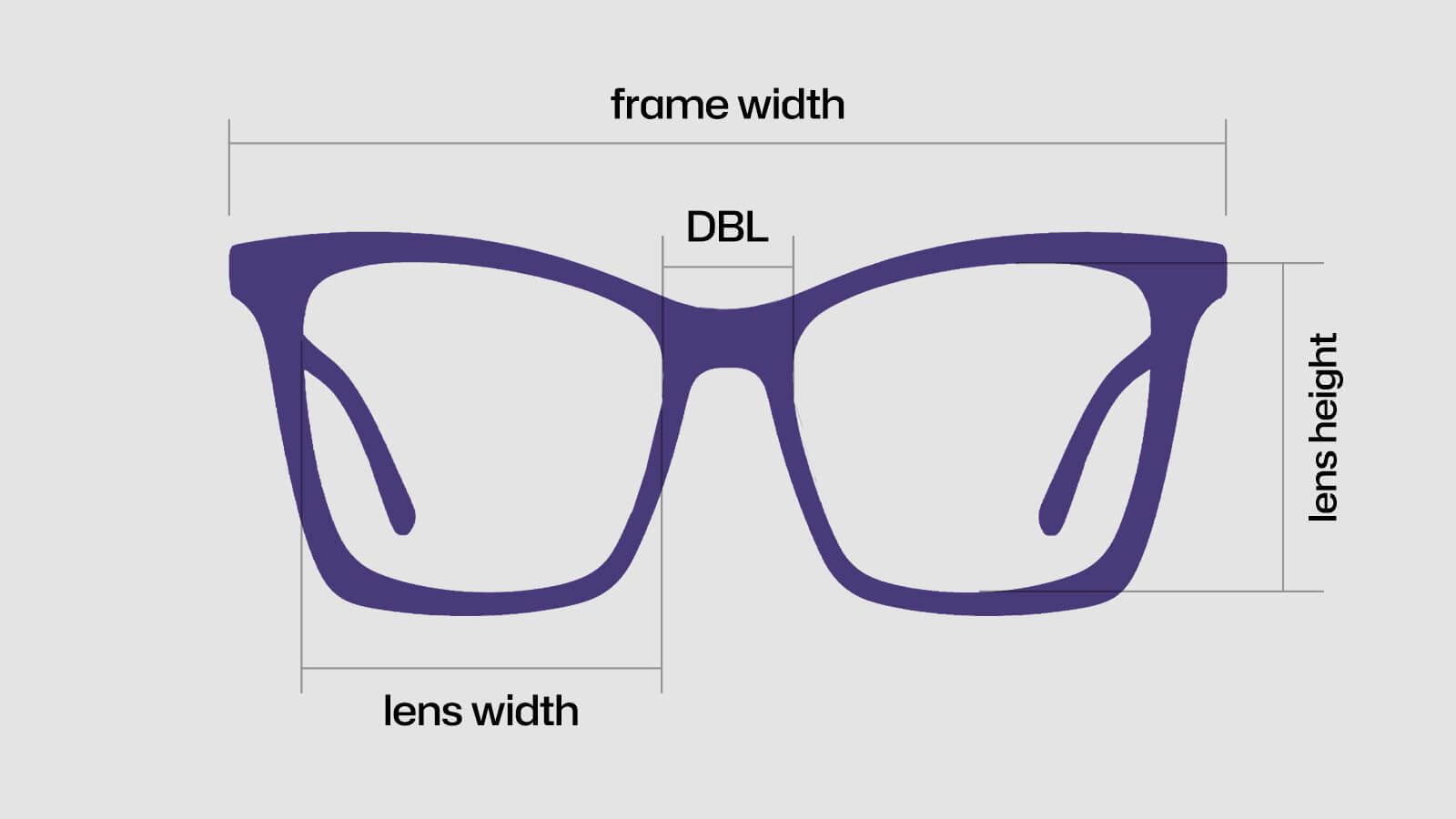
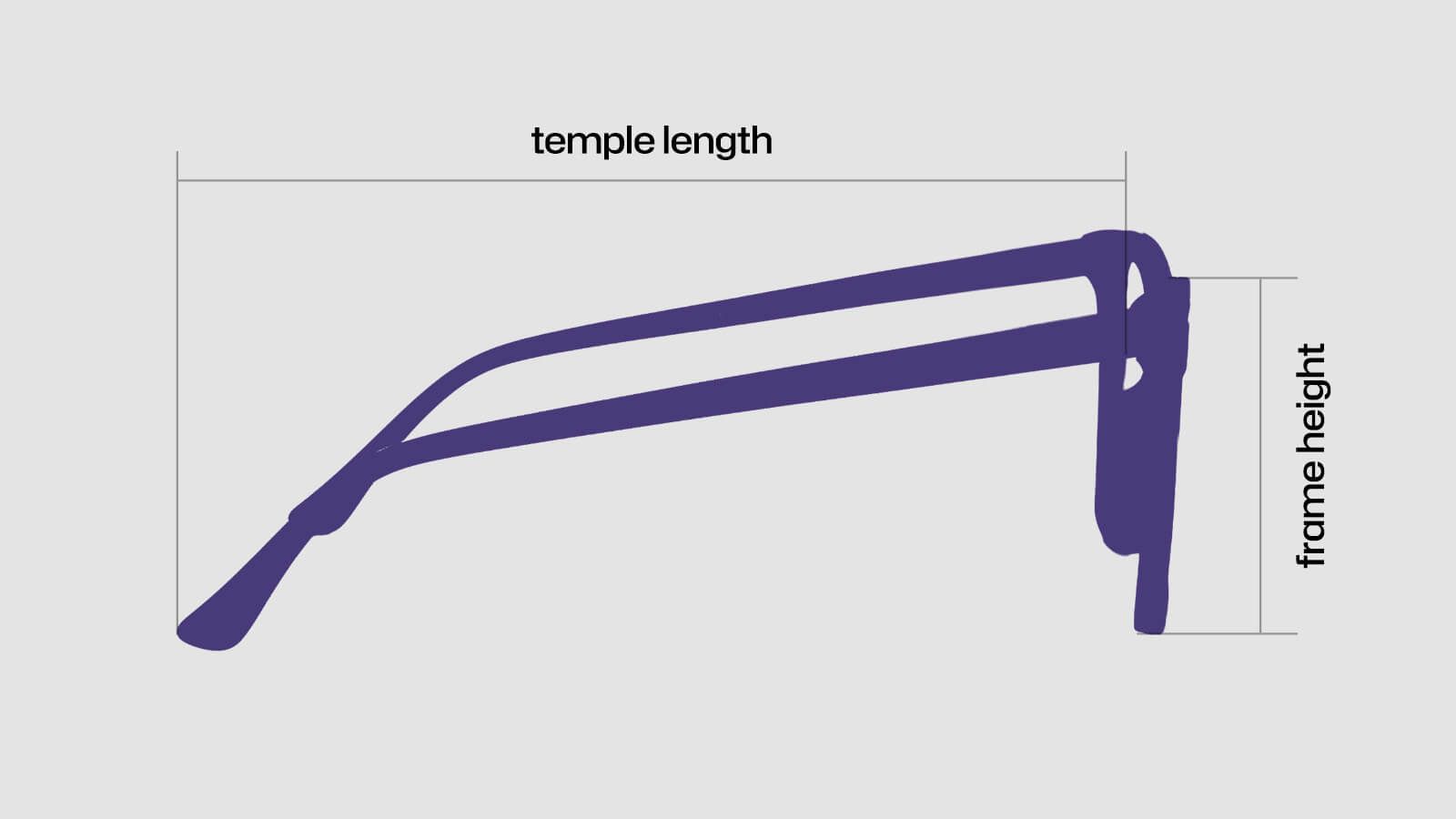
These numbers don’t include total frame width or lens height. Check the product’s measurement diagram for those details. Two frames marked 52–18–140 can still fit differently because their rims, bridges, and hinge positions differ.
How Each Measurement Impacts Your Fit
| Measurement | Where It Is | How It Impacts Fit | How to Choose Yours |
|---|---|---|---|
| Frame width | Across the entire frame front | Too narrow can squeeze your temples; too wide can feel loose. | Compare with a comfortable existing pair. Arms should extend toward your ears without being forced outward. |
| Lens width | Across one lens horizontally | Affects lens coverage and where your eyes appear within the frame. | Look for balanced eye placement, reasonably near each lens’s horizontal center. |
| Lens height | From the top to bottom of one lens | Affects cheek clearance and space available for different lens designs. | Smile to check clearance. For progressives, confirm frame compatibility and fitting-height requirements. |
| Bridge width | The distance between the lenses | Helps determine where the frame sits on your nose. | Compare both the number and bridge design; neither pinching nor slipping is a good fit. |
| Temple length | From the hinge to the arm tip | Affects where the arm bends behind your ear. | Common lengths include 135, 140, and 145mm. The bend should follow your ear without pulling. |
Use these measurements together. A matching lens width alone cannot guarantee a comfortable fit, and your prescription still needs its own lens-position measurements.
Choosing progressives? Lens height and fitting height are different measurements. Fitting height runs from your pupil center to the bottom of the lens. Requirements vary by lens design, so “at least 30mm tall” is not a universal rule.

Don’t Have Old Glasses? Measure Your Face in 30 Seconds
For a rough starting point, face a mirror and hold a millimeter ruler horizontally at temple level. Estimate the straight distance across your head where the frame arms would pass. Keep the ruler straight rather than following your face’s curve.
Use that estimate to shortlist frame widths, then check the product diagram and bridge design. Repeat the measurement once; a quick home measurement is a starting point rather than a final fitting.
| Starting Size | Approximate Adult Lens Width |
|---|---|
| Small | 47–49mm |
| Medium | 50–53mm |
| Large | 54–56mm |
These are general lens-width examples. Retailers use different size categories, so follow each Vooglam product’s listed measurements and size label.
Structural Fit: Choosing Bridge, Pads, Rims & Hinges
Nose Bridge & Nose Pads: The Secret to Pinch-Free Comfort
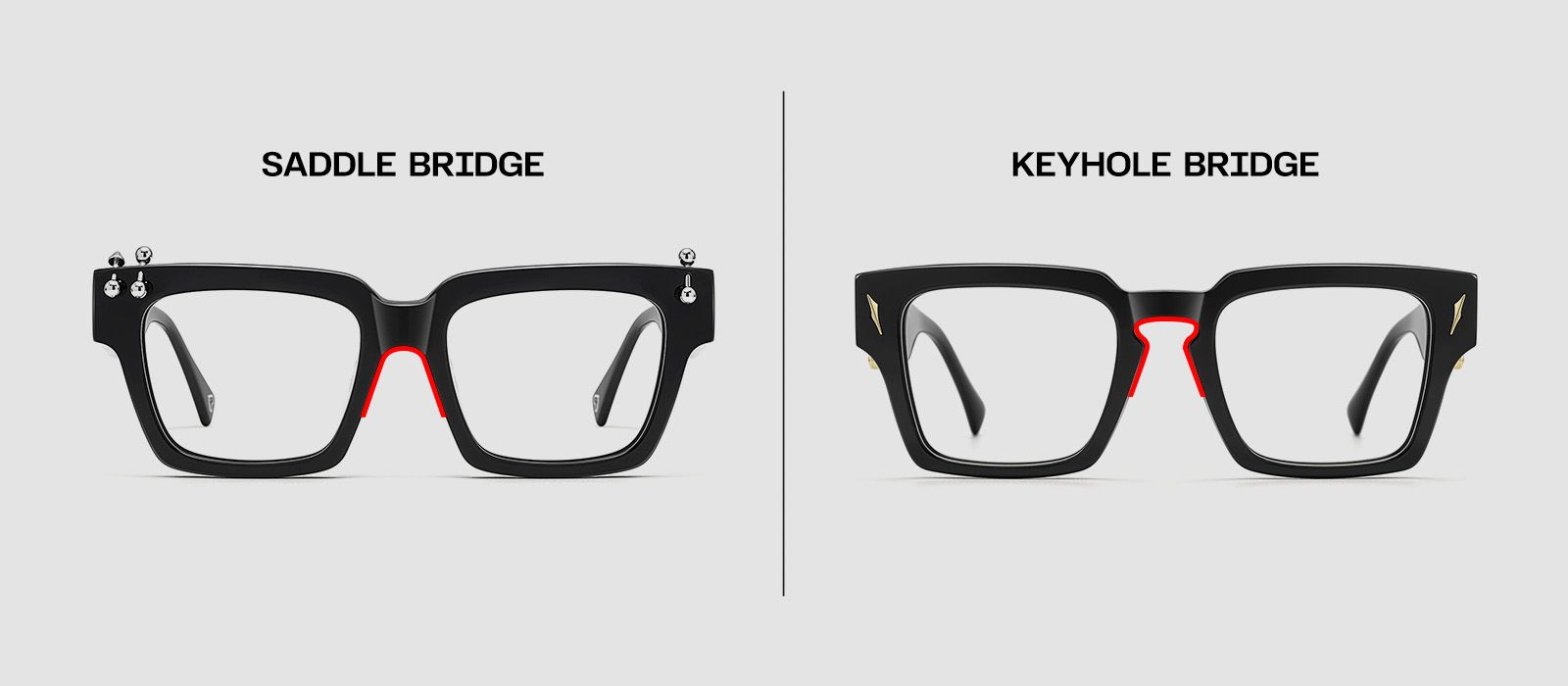
Two frames with an 18mm bridge can feel very different. The number describes spacing; the bridge’s shape determines how it contacts your nose.
| Design | What It Changes |
|---|---|
| Keyhole bridge | Leaves space above the nose and rests mainly along its sides. |
| Saddle bridge | Follows the nose’s contour across a broader contact area. |
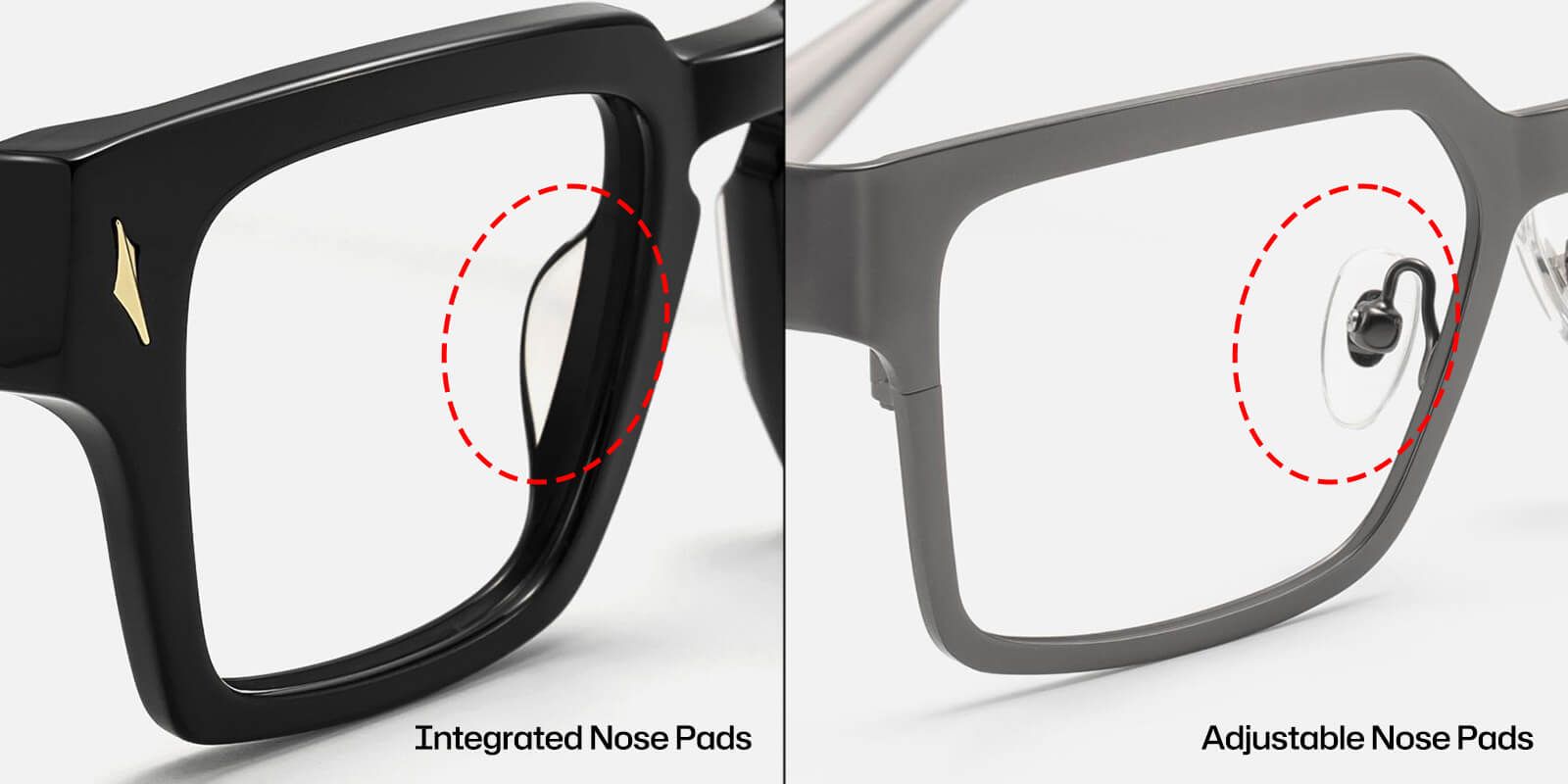
| Integrated nose pads | Are built into the frame, making the original bridge shape especially important. |
| Adjustable nose pads | Allow changes to pad spacing and angle for a more tailored fit. |
Neither keyhole nor saddle bridges suit every nose of a particular height. Look for even contact without gaps or concentrated pressure.
For a lower nose bridge or frequent cheek contact, consider adjustable pads or a design specifically intended for a low bridge. For a higher bridge, check that the opening accommodates your nose without perching or pinching.
Shop Frames for Your Bridge Need:
Glasses Rims: How Full-Rim, Semi-Rimless & Rimless Affect Weight
Less rim material can reduce frame weight, but your lenses, prescription, and frame material also influence how heavy the finished glasses feel.
| Rim Type | Weight & Support | What to Consider |
|---|---|---|
| Full-rim | Surrounds the lens and protects its edges. | Can help conceal thicker lens edges; weight varies with material and construction. |
| Semi-rimless | Uses a partial rim, often with a retaining cord below. | Leaves some lens edges exposed; confirm suitable lens materials and thickness. |
| Rimless | Attaches the bridge and arms directly to the lenses. | Can feel light, but fittings and exposed lenses need careful handling. |
For a sensitive nose, consider total finished weight and pad contact together. Rimless construction alone does not guarantee pressure-free wear.
Vooglam Glasses Rim Types:
Glasses Hinges: Standard vs. Spring Hinges for Wide Heads
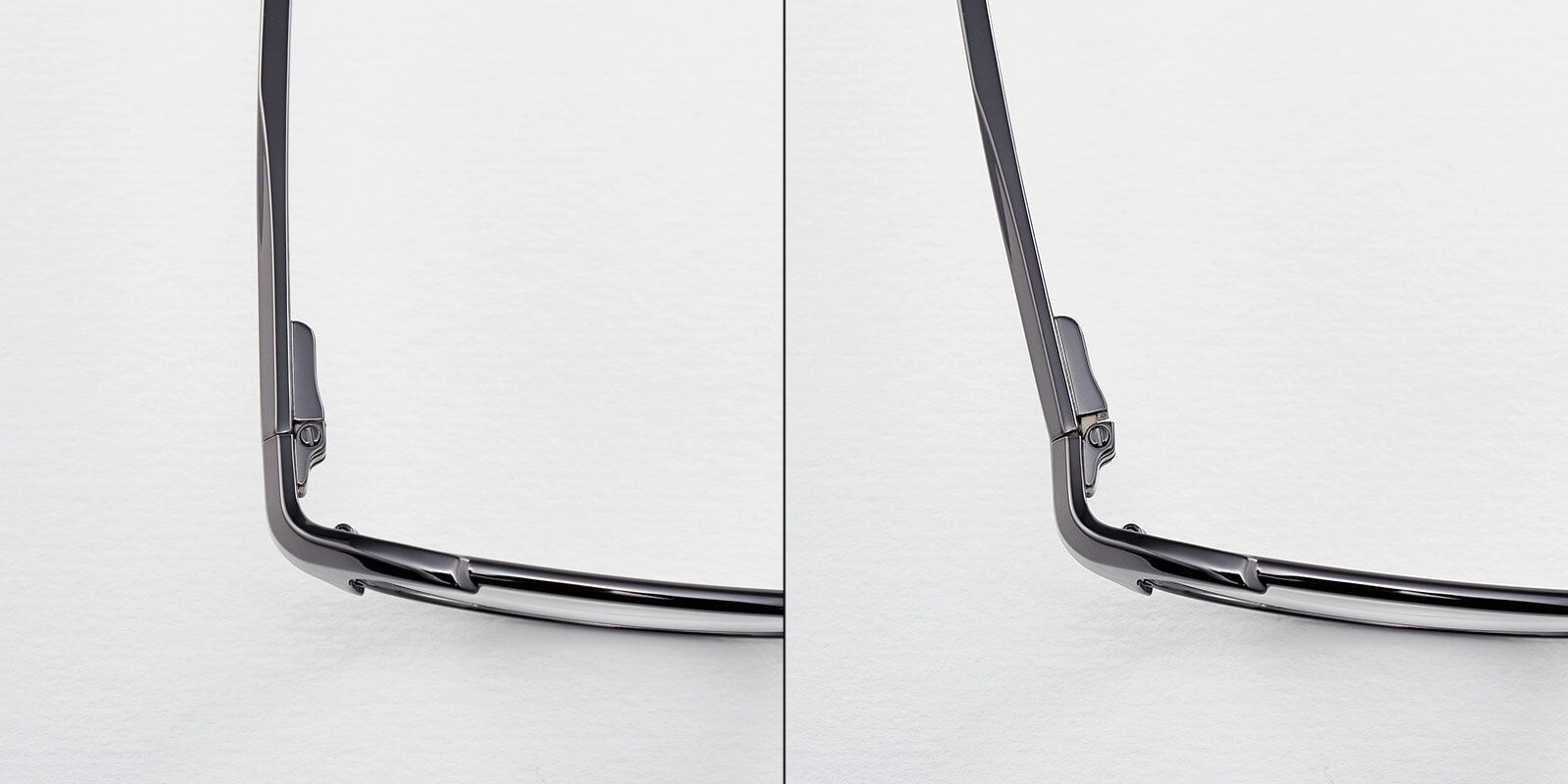
Hinges connect the arms to the frame front and control how they open.
Standard or barrel hinges provide a conventional pivot. Many allow straightforward screw maintenance and professional alignment.
Spring or flex hinges allow some additional outward movement, which may make the arms more forgiving during wear and removal. They still have limits: a frame that is too narrow can squeeze even with spring hinges.
For a wider head, choose enough frame width first, then consider hinge flexibility. Avoid relying on stretched arms to create room.
Troubleshooting Fit: Anti-Slip Tips & Easy Home Adjustments
If you keep pushing your glasses up during a call or taking them off to relieve pressure, check the contact points before choosing a fix.
| Fit Issue | Possible Causes | What to Try |
|---|---|---|
| Glasses keep sliding down | Loose bridge contact, skin oil, loose screws, or poorly positioned ear bends | Clean the pads and contact areas. Check for loose hardware; consider silicone pads or grippy temple tips where compatible. |
| Frames feel too tight | Insufficient frame width, inward pressure from the arms, or ear bends that pull | Check the width first. A suitable frame may need professional temple adjustment; an undersized one may need replacing. |
| Glasses sit crooked | Uneven pad contact, arm misalignment, or differences in ear height | Check how the frame sits on your face. An optician can balance the pads and temples. |
How to Safely Adjust Your Glasses at Home
A suitable new frame may need a small adjustment. Start with clean glasses, a mirror, and the frame maker’s instructions.
- Loose screws: Use a correctly sized eyewear screwdriver and tighten gently. Stop when secure.
- Adjustable nose pads: If the instructions permit, make very small changes while supporting the frame.
- Acetate temple tips: Warm water may help with permitted adjustments. Avoid boiling water, direct heat, and heating the lenses.
- Rimless frames, damaged parts, or resistant materials: Have an optician make the adjustment.
Change one thing at a time and check the fit again. Stop if you feel resistance; don’t force hinges or bend the lens area. Persistent discomfort or blurred vision deserves a professional check.