
How 90s Music Gear Shaped Grunge Rock Frames
Most people notice the frame. The initiated notice the hardware.
Alternative style no longer depends on oversized logos or an outfit that looks pulled straight from a stage. Like other detail-led movements, it now communicates taste through smaller signals: an aged metal finish, a guitar-inspired temple, or a rivet that recalls a worn leather jacket. These elements reward a closer look. They also give grunge eyeglasses cultural weight without turning them into costume pieces.
Vooglam’s Grunge Rock Collection follows that logic. Its 90s music inspired eyewear translates the construction of guitars, amplifiers, chains, studs, and worn accessories into functional frame details. Here is how those references shape each design—and how to choose the hardware that speaks your language.

Anatomy of a Grunge Frame
The identity of vintage hardware glasses rarely comes from one decorative symbol. It develops through the relationship between material, shape, finish, and scale.
Glossy or patterned acetate creates the base. Aged silver, antique copper, and dark metallic accents interrupt that surface with contrast. Some details refer directly to music equipment; others borrow from the clothing and hardware found around 90s alternative scenes.
That balance matters. The frames feel informed by music culture, yet they still work in studios, offices, galleries, and everyday city routines.

The Guitar String Accent for the True Music Head
The Anacortes frame makes its reference clear without printing a band name across the temple. Its raised metal forms draw from the tuning pegs and string lines of an electric guitar headstock. Against the structured rectangular front, that hardware reads like a miniature piece of instrument construction.
The detail becomes more visible when you turn your head. From the front, the silhouette stays controlled. From the side, the exposed core wire, string-like lines, and tuning-peg shapes reveal the frame’s real character. It is the kind of design that another guitarist, producer, or attentive music fan may recognize before anyone else does.
Vooglam offers Anacortes in solid black as well as lighter horn-pattern finishes. The darker version creates a stronger contrast with silver-tone hardware, while the brown pattern and pale gold accents feel more worn-in. The frame is also available with several lens treatments, including color tints, mirrored lenses, and prescription options.
That flexibility lets you move beyond one fixed interpretation of 90s music inspired eyewear. A clear lens keeps it practical for daily use; a smoky or mirrored tint pushes the same hardware closer to the energy of a live set.
For anyone searching for glasses for vintage metal fan styling, this is the most direct connection between the instrument and the eyewear. The reference is specific, but the rectangular shape keeps it easy to wear with a faded tee, work jacket, or simple dark knit.
The Amp-Grille Argyle and Vintage Industrial Texture
Eerie takes a quieter route. Its brushed metal accents and geometric temple pins evoke the diamond grids found on vintage amplifier grilles and old microphone housings. The reference is textural rather than literal. You do not need to know the model of an amplifier to understand the weight and familiarity of the pattern.
That makes Eerie one of the collection’s most adaptable pairs of grunge eyeglasses. The substantial round front softens the harder metal details, while glossy black acetate gives the frame a more direct presence. Brown striped acetate shifts the mood toward a retro revival look. Clear blue brings a cooler contrast to the same construction.
At a record shop, Eerie fits naturally with a washed chore coat and a plain white tee. At the office, the round silhouette works with dark tailoring or a clean monochrome shirt. The hardware adds a point of view without making the entire outfit revolve around the glasses.
This is where vintage metal design becomes useful rather than theatrical. The aged accents create depth, while the corrosion-resistant temples support regular wear. The result feels connected to industrial music equipment but remains grounded enough for an ordinary Monday.

Distressed Chains and Studs as Underground Hardware
Chains, studs, and rivets carried information long before they became general fashion details. In alternative music scenes, they appeared on wallet chains, perforated belts, customized leather jackets, and hardware repaired or added by hand. Their surfaces were rarely perfect. Scratches, oxidation, and uneven color made each piece feel used rather than displayed.
Vooglam translates that language across several different silhouettes. Lennon uses compact round lenses with perforated antique-copper temples and raised rivet details. The khaki-and-black horn pattern makes every front slightly different, while nickel-free plating supports more comfortable daily wear. Its scale feels familiar, so the aged hardware can do the expressive work.
Albini takes a more linear approach. Silver-tone cast-metal chain temples sit beside a clean rectangular front, creating a stronger side profile. A translucent woodgrain finish softens the industrial reference, while darker marble versions make it more graphic. The effect works especially well with simple outfits because the chain structure supplies its own texture.
Rainier turns workwear hardware into smaller accents. Mushroom-shaped rivets and zipper-pull details appear against an angular, crown-shaped rectangular frame. In translucent amber, the design feels lighter and more relaxed; dark blue and black versions give it a sharper read. The medium-width construction also provides an option between Lennon’s compact round profile and Albini’s wider rectangle.
Together, these frames show why vintage hardware glasses do not need one standard shape. Round, rectangular, and geometric options let you choose according to your own fit and visual preference. The shared distressed finish keeps the family connection clear.

Retro Cross Reliefs as a Stronger Statement
Vernon is designed for greater visual impact. Thick acetate meets irregular beveled planes across the brow and outer corners, giving the square front a cut, multi-angle structure. Aged silver-tone relief hardware and shield-shaped studs sit along the temples like pieces of worn jewelry.
The cross-inspired relief is not treated as a flat printed graphic. Its raised surface catches light differently as the wearer moves. That physical depth gives the frame a heavier presence than a conventional black square frame.
Vernon works best when you want the eyewear to become the visual center of an outfit. Try it with an oversized black coat, faded denim, or a minimal high-neck top. At a gallery opening or night event, the faceted front holds its own without needing layers of extra accessories.
This is also the collection’s clearest expression of vintage metal design as a fashion statement. The glossy acetate provides a clean background for the distressed hardware, while the recessed hinge area prevents the construction from looking cluttered. Black delivers the strongest contrast, but striped olive and brown horn finishes create a more organic alternative.

Crafted for the Mosh Pit and Refined for the Office
The collection may begin with the energy of live music, but everyday function keeps it out of the costume box. A frame still has to move through long workdays, commutes, late dinners, and the occasional crowded venue.
That starts with choosing the right scale. A narrow rectangular frame can feel precise and compact, while a wide round or rectangular front creates more presence. Medium geometric shapes offer a middle ground. Rather than assuming every design works for every wearer, check the listed frame width against a pair you already find comfortable.
Material balance matters as well. Substantial acetate gives many of these grunge eyeglasses their visual weight, while integrated hinges and carefully finished temples support frequent use. Hardware should feel like part of the construction, not an accessory attached at the last minute.
Lens customization also changes where the frames can go. Single-vision, reader, progressive, blue light blocking, photochromic, tinted, polarized, and mirrored options are available across selected designs. A clear prescription lens can take aged-metal frames into a creative office. A gradient or mirrored tint can shift the same silhouette toward concerts, festivals, or outdoor weekends.
For styling, let one material connection guide the outfit. Pair antique copper with brown leather or earth-toned knitwear. Match silver-tone chains with washed black denim or cool gray layers. If the frame already features patterned acetate and raised hardware, keep other accessories restrained. The detail becomes easier to notice when it has space around it.
That is the real advantage of vintage hardware glasses: they do not ask you to dress like a musician. They carry enough cultural detail to give an everyday outfit its own frequency.
Find the Hardware That Speaks to You
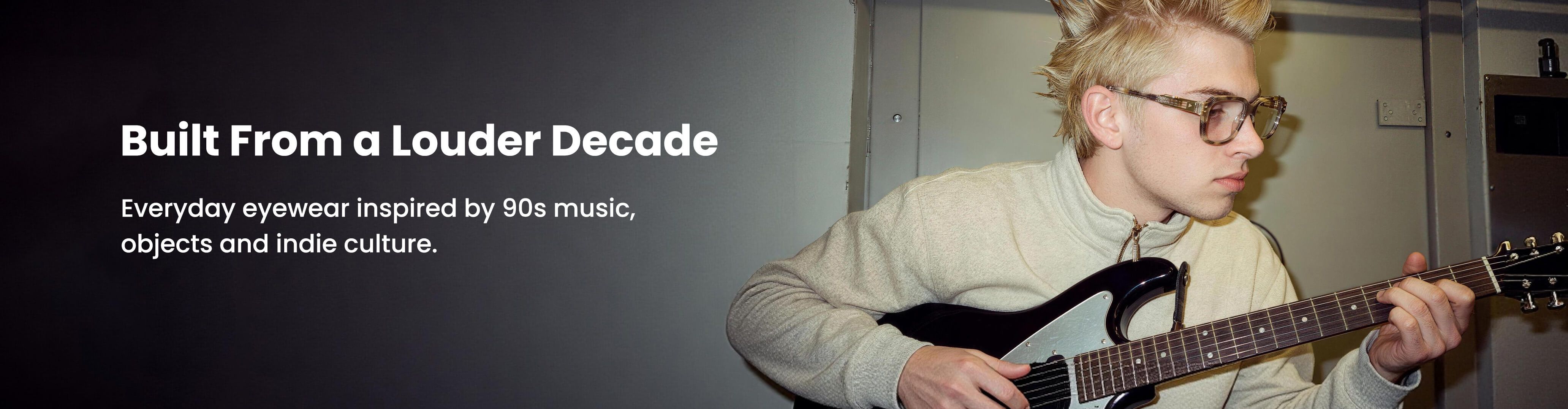
The best 90s music inspired eyewear does more than reproduce a familiar symbol. It understands why those materials mattered: guitar hardware suggested construction, amp grilles carried industrial weight, and worn chains or studs recorded a life outside pristine display cases.
Vooglam turns those references into wearable choices. Anacortes speaks most clearly to instrument lovers. Eerie keeps the industrial connection subtle. Lennon, Albini, and Rainier explore distressed accessories across different shapes. Vernon makes the hardware impossible to ignore.
Within Vooglam’s Grunge Rock Collection, you can compare frame widths, hardware finishes, colorways, and lens options before choosing the pair that fits your routine. The right frame will not announce your taste with a logo. The details will already have said enough.