
Let’s say you are stepping out of a dimly lit, underground gallery opening on a Saturday afternoon. The second you hit the pavement, the harsh midday sunlight instantly blinds you. For the analytical shopper, eye protection isn't just about aesthetics; it is about maximizing utility, comfort, and long-term value. You might find yourself staring at a screen of endless optical options, wondering, exactly do I need blue light or Transitions® glasses? If you are meticulously weighing photochromic vs sunglasses right now, you are in the perfect place. In this comprehensive guide, we will break down the exact pros, cons, and optical engineering behind each choice. You will learn how to maximize your investment and find the absolutely best lenses for indoor outdoor use. Let's examine the data so you can make a much smarter eyewear decision. 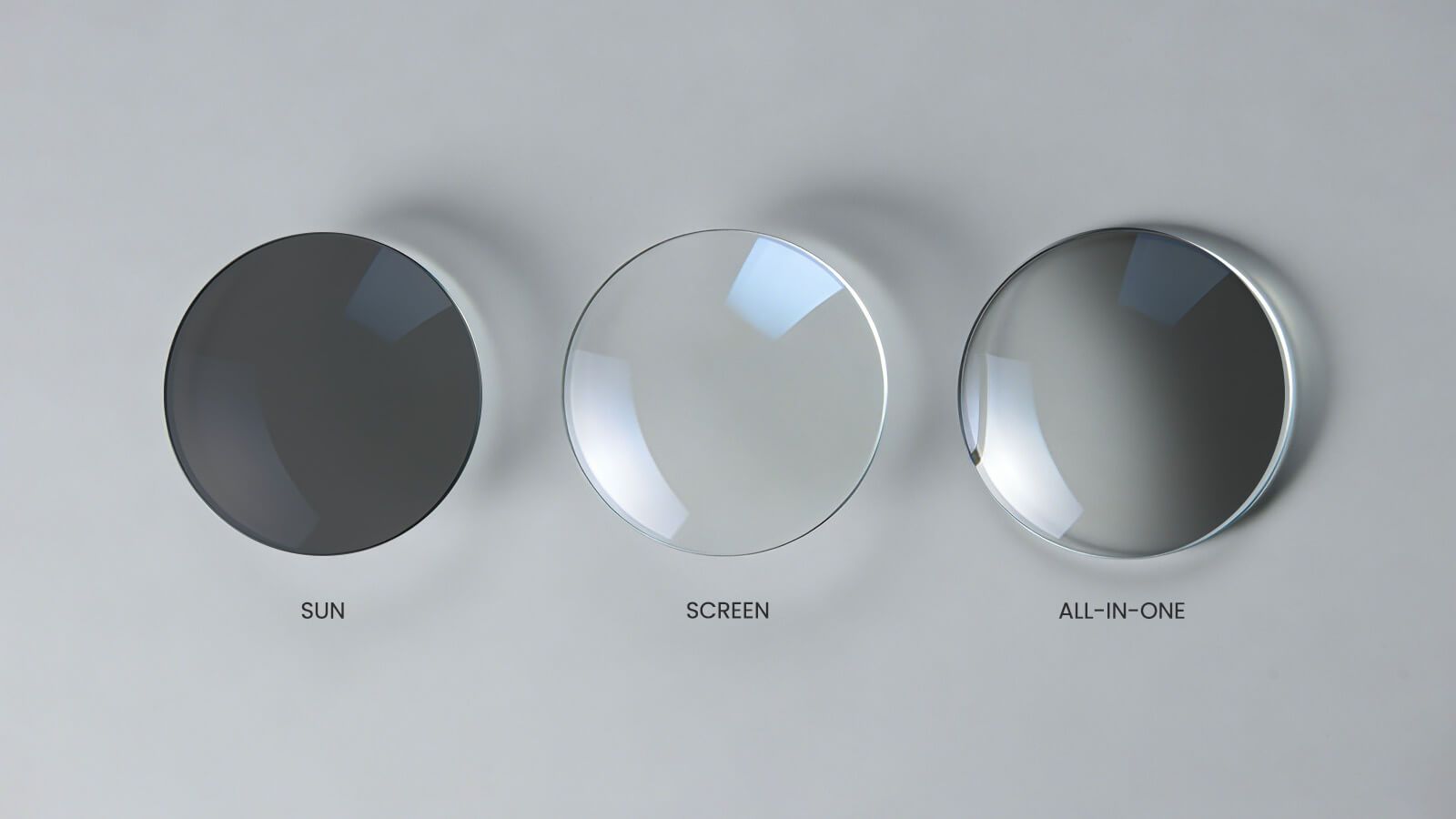
Learn More about Vooglam Transitions Photochromic Lenses >>
Option 1 – Traditional Sunglasses
We all love a dedicated pair of dark, stylish shades. They offer absolute UV defense and a classic, mysterious look when you are strictly outdoors. However, if you require a prescription, traditional sunnies introduce a massive logistical flaw into your day.
The Cost of Swapping Frames
Imagine carrying two separate pairs of glasses everywhere you go. You read a menu inside a cafe, switch to your clear frames, and then awkwardly swap back the moment you leave. Furthermore, dark sunglasses are entirely impractical indoors. For someone calculating cost-per-wear, buying two separate, high-quality prescription pairs might not offer the best return on investment. The constant switching disrupts your flow and increases the risk of dropping or losing your favorite frames.
Option 2 – Standard Photochromic Lenses
This brings us to the first hybrid optical solution. Standard adaptive lenses use basic UV activation to darken outside and clear up indoors. When comparing photochromic vs sunglasses, these eliminate the frustrating need to carry two sets of frames, offering clear, functional value to your daily routine.
The Limitations of Basic Tech
While they certainly work, standard adaptive versions have a noticeable response lag. They might take a few minutes to fully fade back to a clear state when you walk inside. Additionally, they rely heavily on direct UV light to activate. This means their clarity and tint can be quite inconsistent in shaded outdoor areas or inside a vehicle. They are a solid starting point, but they set the stage for more premium framing solutions that match your vibrant lifestyle.
Option 3 – Advanced Photochromic (Transitions®s GEN S)
If you want to truly optimize your daily routine, you need to closely look at Transitions®s lenses vs standard photochromic. Advanced options like Transitions®s GEN S represent a massive leap forward in optical engineering. They activate almost instantly outdoors and fade back to crystal clear much faster than older generations.
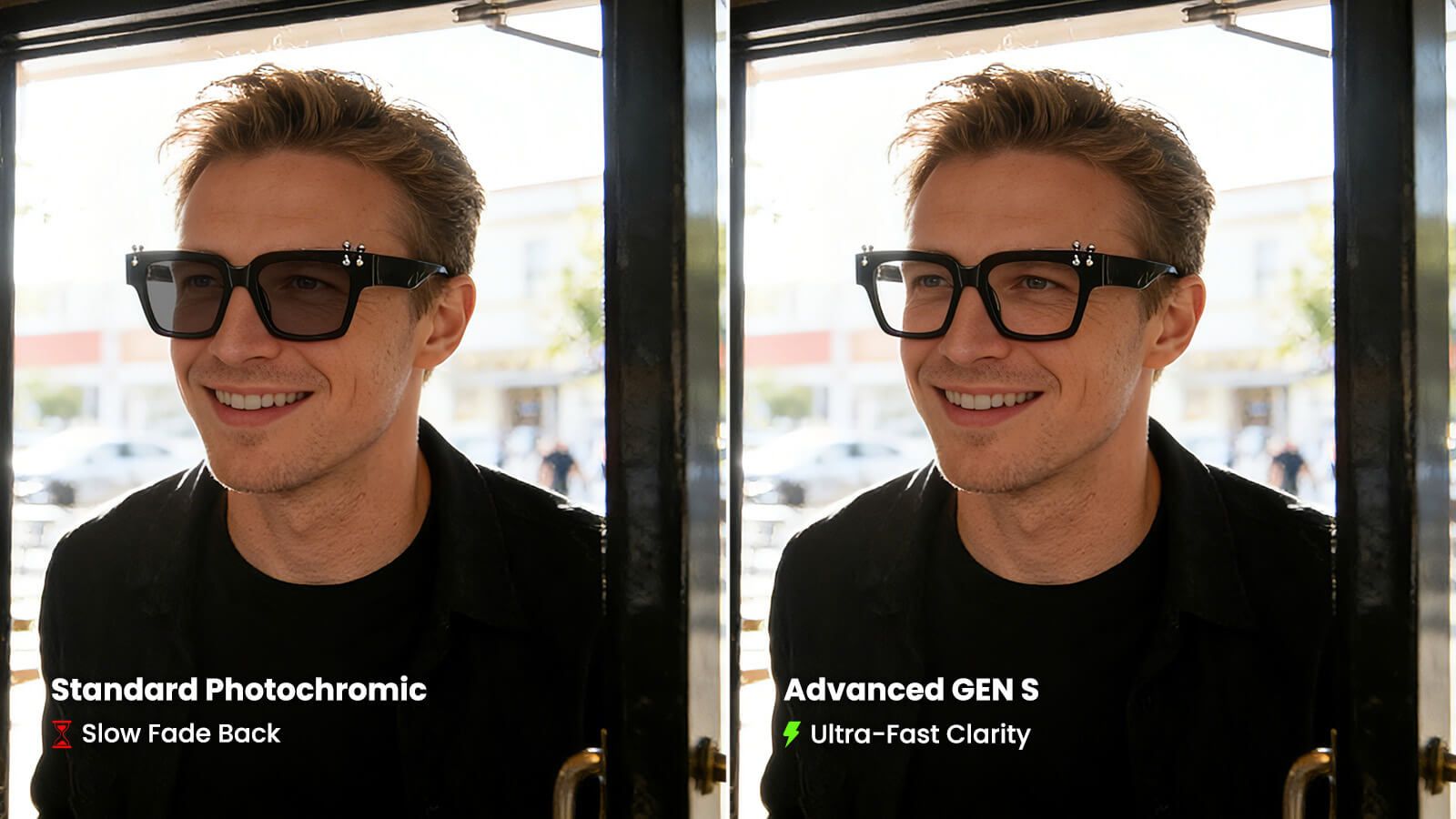
Get 30% Faster Fade-Back. Discover Transitions® GEN S Advanced Photochromic Tech >>
Comprehensive Digital Protection
Modern life demands much more than just basic UV defense. According to a 2023 comprehensive review published in the Clinical Optometry journal, advanced adaptive lenses significantly reduce visual fatigue by actively filtering harmful artificial frequencies. Additionally, a 2024 peer-reviewed study in the Journal of Vision Science confirmed that rapid-fade lenses improve indoor visual acuity by 30% compared to older models. (This article is not a substitute for a professional diagnosis.)
This dual-action protection is exactly why blue light photochromic lenses are currently dominating the market. You get consistent outdoor clarity, vibrant style tint options, and built-in blue light filtration for your screen-heavy workdays. They easily rank as the best lenses for indoor outdoor use.
What About High-Index Lenses?
Even the absolute best lenses for indoor outdoor use will fail you if they are too heavy. If you have a strong prescription, your lenses will naturally be thicker at the edges. A thick, heavy lens sliding down your nose ruins the comfort of your meticulously chosen Vooglam frames.
The Aesthetics of Thinner Optics
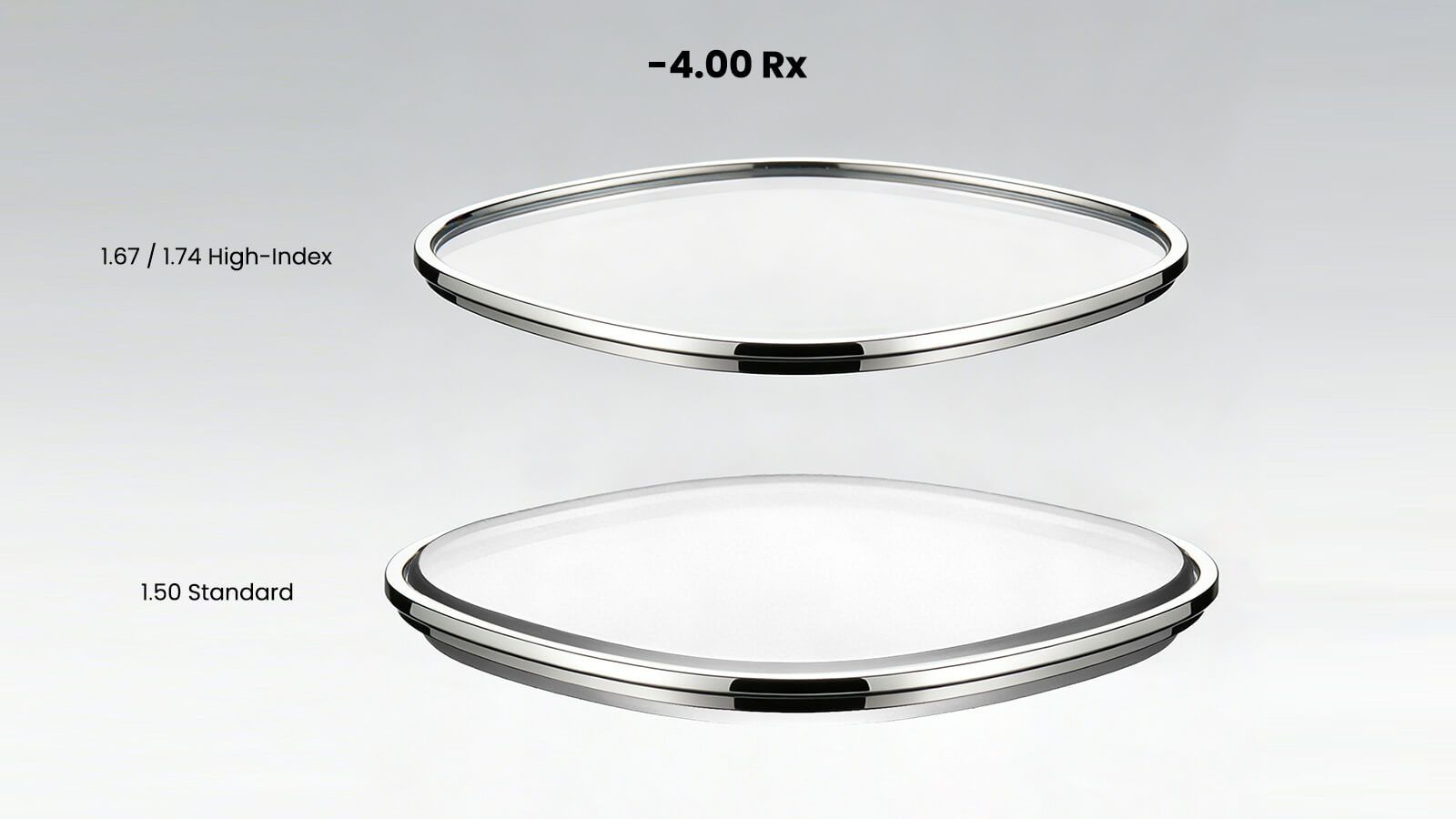
Upgrading to a high-index material ensures your lenses pair beautifully with adaptive tech. Let’s look at a real-world scenario: a −4.00 prescription. In a standard 1.50 index, that lens will be noticeably thick and heavy. When you evaluate Transitions®s lenses vs standard photochromic, adding high-index materials to the mix completely changes the aesthetic.
| Lens Index | Thickness Level | Best For |
| 1.50 Standard | Basic / Thickest | Very mild prescriptions |
| 1.67 High-Index | Up to 20% thinner | Moderate Rx, everyday wear |
| 1.74 High-Index | Up to 30% thinner | Strong Rx (-4.00+), aesthetic focus |
Optimize for Aesthetics & Weight: Shop High Index Lenses >>
When Is an Upgrade Worth It?
For the analytical shopper, a premium frame combined with an advanced lens is a highly calculated investment in daily comfort. If you wear rimless or minimalist frames, high-index blue light photochromic lenses are practically mandatory to maintain that sleek, uninterrupted profile.
Maximizing Your Vooglam Experience
If you wear your glasses from the moment you wake up until you go to bed, the lens upgrade pays for itself in reduced eye strain and sheer convenience. At Vooglam, we firmly believe your eyewear is a canvas for fearless self-expression. You shouldn't have to compromise the daring, unique style of your funky frames with heavy, outdated lenses. When you thoroughly evaluate Transitions®s lenses vs standard photochromic, the advanced tech simply lets you focus on being uniquely you.
Learn More about Vooglam Blue Light + Transitions® Frame >>
Conclusion
Choosing between your eyewear options doesn't have to be a frustrating guessing game anymore. When you carefully analyze photochromic vs sunglasses, the data points clearly toward hybrid solutions for everyday versatility. By investing in advanced blue light photochromic lenses, you proactively tackle UV rays, digital screen glare, and the daily hassle of frame-swapping all at once.
If you are still asking yourself, "do I need blue light or Transitions® glasses?", the smartest answer is often both, seamlessly engineered into one lightweight package. They truly are the best lenses for indoor outdoor use, adapting to your subcultural authenticity and personal style. Ready to frame your rebellion with crystal-clear precision? Upgrade your optics and transform your look today.
[Upgrade to Advanced Photochromic Lenses]
You May Also Like:
Photochromic Lenses 101: How They Work & Why You Need Them >>
Lenses Made Simple: The Ultimate Guide to Types of Eyeglass Lenses >>
Polarized vs. Photochromic Lenses: What's the Difference? >>
Are Transitions® GEN S Lenses Worth It? A Real-World Performance Breakdown >>