
You’ve finally found it: the perfect frame. It’s a whisper-thin titanium wire or a sleek, rimless design from Vooglam’s Ultra-Light collection. It promises the "zero-gravity" look—barely there, sophisticated, and effortless.
But there is one hurdle left. If you have a strong prescription, you know the fear of the "Coke bottle" effect. You worry that once your prescription is cut, that elegant, airy frame will be weighed down by thick, protruding glass. This is where the magic of high-index lenses comes in. It is the technology that allows high-prescription wearers to participate in the minimalist aesthetic without compromise.
The question isn’t if you need high-index, but which one? Let’s decode the difference between 1.67 vs 1.74 high index lens options to ensure your new glasses look as light as they feel.
Understanding the Index: Why It Matters for Your Style
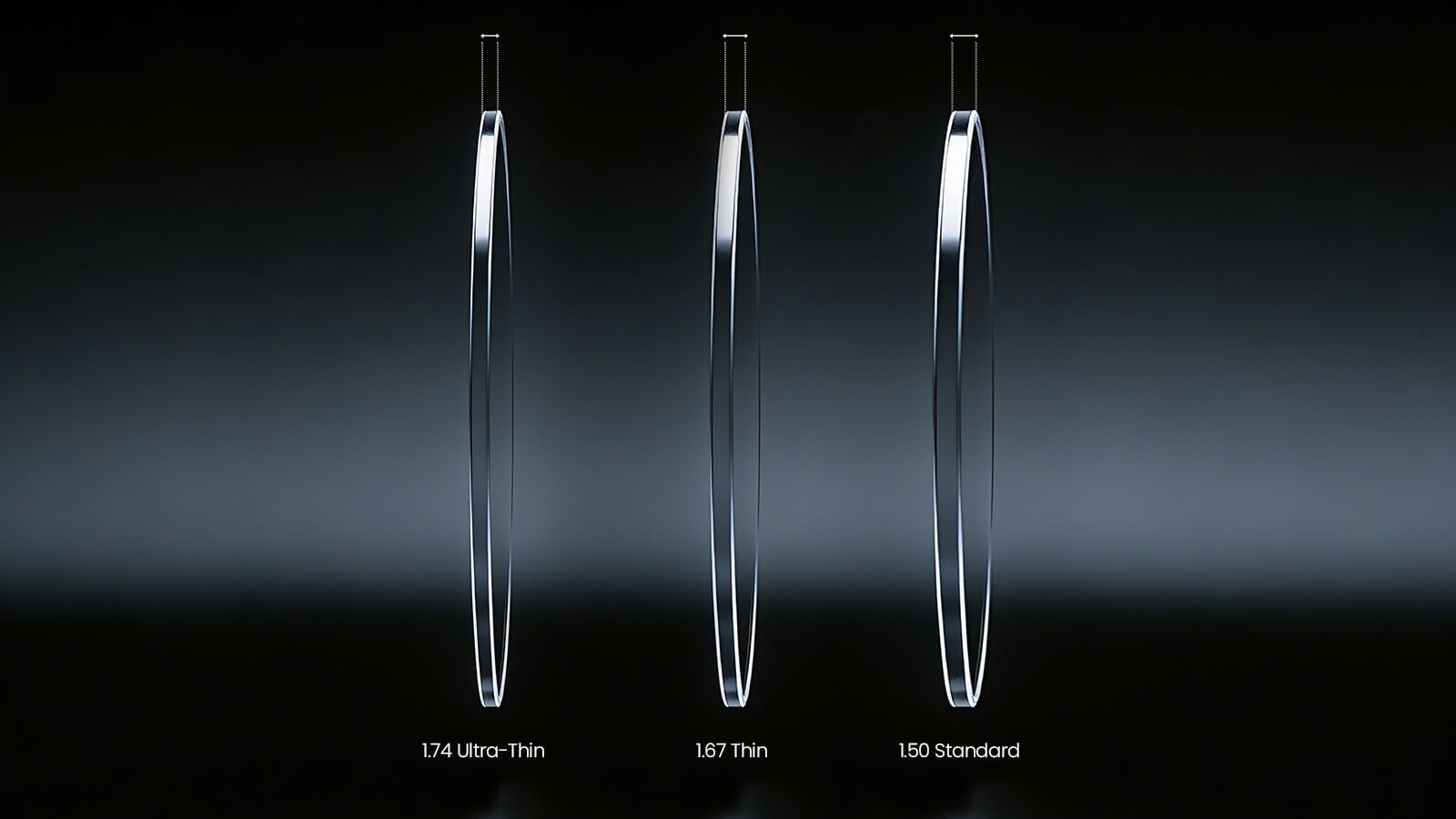
In simple terms, the "index" number refers to how efficiently a lens material bends light. The higher the number, the less material is needed to correct your vision.
For someone with a mild prescription, standard lenses (1.50 index) are fine. But as the prescription strength increases, standard lenses become physically thicker and heavier to do the job. For eyeglasses for high prescription, moving up the index ladder is the only way to keep the lens thin.
At Vooglam, we emphasize this because a great frame design can be ruined by the wrong lens choice. A 1.67 or 1.74 lens compresses the optical power into a slimmer profile, reducing the "minification" effect (where your eyes look tiny) or the "magnification" effect (where they look huge).
Match Your Prescription to the Perfect Profile. Shop Now >>
The Comparison Table: 1.50 vs 1.67 vs 1.74
To make the decision easier, here is a breakdown of how these materials perform relative to a standard lens.
| Feature | 1.50 Standard Index | 1.67 High Index | 1.74 Ultra-High Index |
| Thickness Reduction | Baseline (0%) | ~20% Thinner than standard | ~40-50% Thinner than standard |
| Weight | Heaviest | Lightweight | Ultra-Lightweight |
| Aesthetic Profile | Thick edges, protrudes from frame | Slimmer edges, flush with most frames | Flattest profile, practically invisible |
| Ideal For | Prescriptions up to +/- 2.00 | Prescriptions +/- 2.00 to +/- 6.00 | Prescriptions over +/- 6.00 |
| Rimless Suitability | Poor (Prone to cracking/heavy) | Good (Durable & Light) | Best (Maximize minimalism) |
Read More: Ultra-Lightweight Glasses: What They Are, Why They Matter, and Who Should Wear Them >>
Get the Best High Index Lenses for Your Designer Frames >>
Why Ultra-Light and Rimless Frames Demand Thinner Lenses
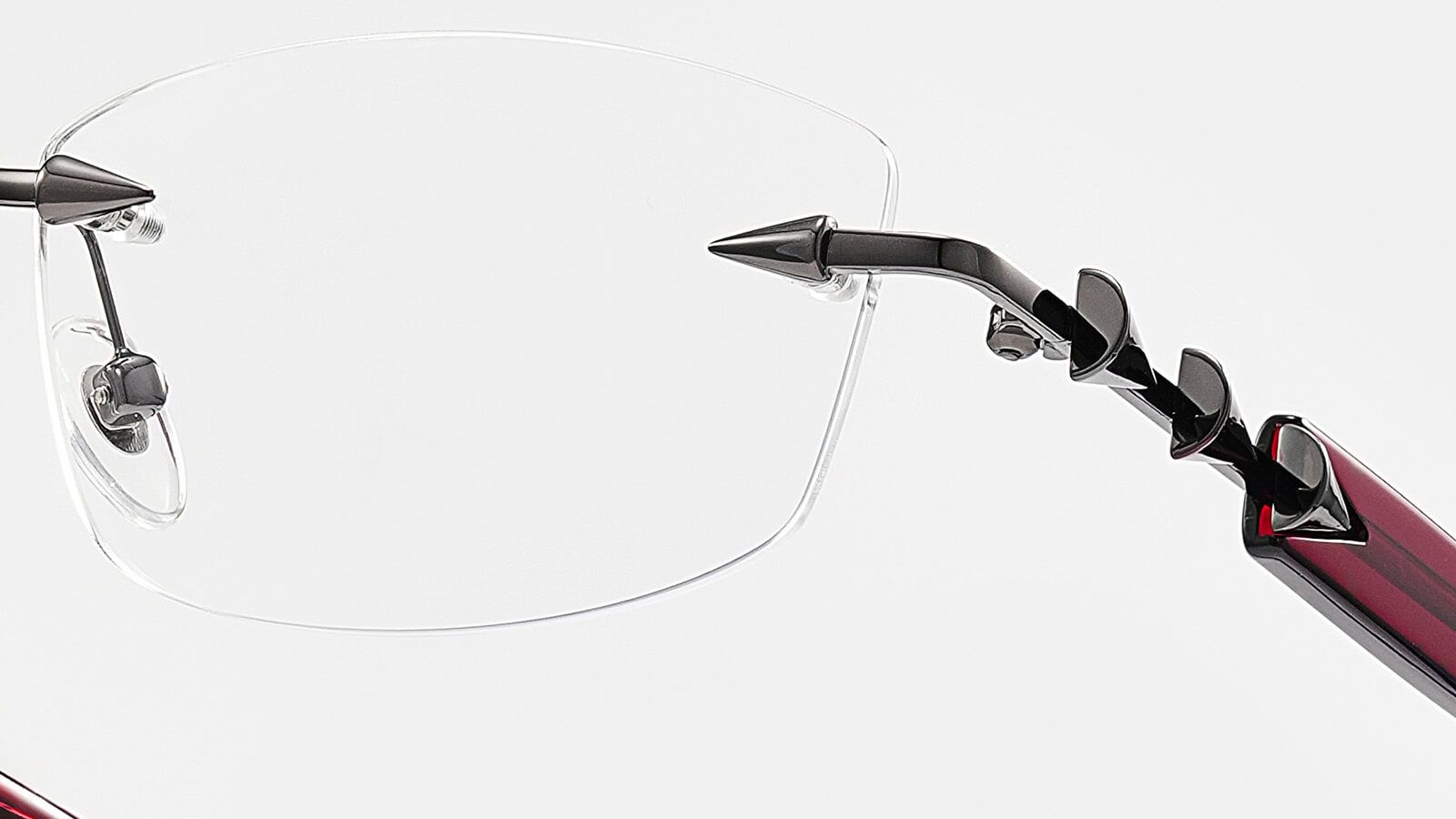
If you are buying a chunky, bold acetate frame (like our Bloody Opium series), the thick rim can hide the edge of a thicker lens. But with rimless designer glasses or thin metal geometric frames, there is nowhere to hide.
The mechanics of a rimless frame rely entirely on the lens for structure. If you pair a heavy, standard lens with delicate titanium temples, the balance is thrown off. The glasses become front-heavy, sliding down your nose constantly—defeating the purpose of buying "ultra-light" glasses in the first place.
Furthermore, high index lenses for strong prescription needs are about aesthetics. With a rimless design, a thick lens edge catches the light, creating white rings and reflections that distract from your face. A 1.74 lens minimizes this edge profile, maintaining that "invisible" look you are paying for.
Scenario Guide: Who Should Choose 1.74?
Let’s put this in the real world.
Imagine you are at an evening gallery opening. The lighting is spotty, and you are mingling with clients. You want to look sharp and intellectual, wearing a pair of Vooglam’s rimless titanium frames.
- Scenario A: You choose 1.67 (Prescription -4.00). This is the sweet spot. The edges are thin enough to look polished, and the cost is balanced. Your glasses stay put, and you look great.
- Scenario B: You choose 1.67 (Prescription -8.50). Here, the 1.67 might struggle. The edges will likely be thicker than the nose bridge hardware. You might feel self-conscious about the side view.
- Scenario C: You choose 1.74 (Prescription -8.50). This is the game changer. The 1.74 lens is dense and flat. The edges are polished down significantly. Your eyes look natural, not distorted. You aren't "the person with thick glasses"; you are just the person with impeccable style.
If your prescription is above +/- 6.00, or if you have a high astigmatism, we strongly recommend the 1.74 upgrade for any rimless or thin-metal purchase.
Achieve the "Invisible" Edge: Shop High Prescription Rimless Glasses >>
Beyond Function: The Aesthetic Edge of High Index
High-index lenses aren't just about weight; they are about clarity and finish.
At Vooglam, our best high index lenses come with advanced coatings included. Because high-index materials reflect more light naturally, anti-reflective (AR) coating is essential. We ensure this is standard. This means better driving vision at night and better eye contact during Zoom calls, as the lenses disappear rather than reflecting your screen.
Additionally, 1.74 lenses are often aspheric, meaning they are flatter on the front. This reduces the "fishbowl" distortion effect that spherical lenses can have, giving you sharper peripheral vision.
Price-Value Framing: Investing in Long-Term Comfort
We know that upgrading to 1.74 is an investment. It costs more than standard polycarbonate. However, consider the longevity.
You wear your glasses for 12 to 16 hours a day. They are the first thing people see when they look at you. Investing in high prescription rimless glasses with the correct lens is investing in daily comfort. It prevents the red marks on your nose. It stops the headache from heavy frames. It ensures that your expensive, stylish frame actually looks expensive.
Don't put a lawnmower engine in a Ferrari. If you are choosing a premium ultra-light chassis, power it with the premium engine: the 1.74 lens.
Ready for the Upgrade?
Your perfect frame deserves the perfect lens.
Upgrade your view with Vooglam’s High-Index Lenses.
Experience the true definition of ultra-light.
[Shop High-Index Lenses Campaign]