
In the push for "invisible" lens technology, the classic bifocal often gets a bad reputation. People hear "bifocals" and immediately picture their grandparents, or they think of the visible line across the lens as outdated.
But here is the reality: Bifocal glasses remain one of the most reliable, effective, and comfortable solutions for vision correction today.
Unlike progressive lenses, where some wearers experience temporary dizziness or "swimmy" peripheral distortion during the adjustment period, bifocals offer instant, crystal-clear optics. If you have struggled to adapt to modern "no-line" lenses, the classic bifocal might actually be the upgrade you need.
In this guide, we’ll explore exactly what bifocal glasses are, the fascinating history behind their invention, and the different types available for your Vooglam frames.
This article is not a substitute for a professional diagnosis.
What Are Bifocal Glasses?
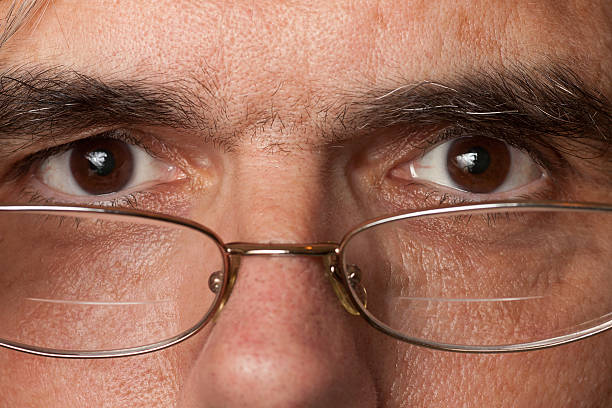
The word "bifocal" literally means "two foci" or two focal points. Bifocal glasses are lenses divided into two distinct parts to correct two different vision problems at the same time:
- The Top Part (Distance): This covers the majority of the lens. It holds your primary prescription—whether you are nearsighted (myopia), farsighted (hyperopia), or have astigmatism. This is the part you look through when driving, walking, or watching TV.
- The Bottom Part (Near): This small segment—often shaped like a 'D' or a circle—contains your reading power. It creates a dedicated zone for checking your phone, reading a menu, or doing close-up work.
These two zones are separated by a visible line. While some view this line as a cosmetic drawback, it serves a critical function: it creates a hard boundary between "Far" and "Near." This allows your eyes to switch instantly between distances without the blurring or "soft focus" areas found in progressive lenses.
A Brief History: When Were Bifocals Invented?
You might be surprised to learn that this technology is older than the United States Constitution.
When were bifocals invented? Bifocals were invented in the late 18th century, specifically around 1784.
Did Ben Franklin invent bifocals? Yes, Benjamin Franklin is widely credited with the invention of the original bifocal. As he aged, Franklin became frustrated with the hassle of constantly switching between his "distance" spectacles and his "reading" spectacles. To solve this, he cut the lenses of both pairs in half and combined them into a single frame—mounting the distance half on top and the reading half on the bottom. This ingenious "Franklin Split" created the world's first bifocal glasses, changing eyewear forever.
Types of Bifocal Lenses (Shapes & Styles)
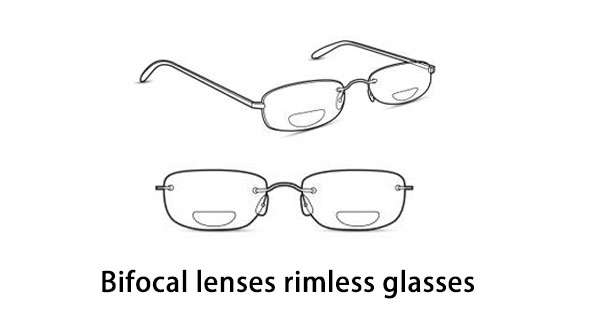 Not all bifocals look the same. Over the centuries, the design has evolved to offer better aesthetics and wider fields of view. Here are the most common types of bifocal lenses you can choose from:
1. Flat-Top (D-Segment)
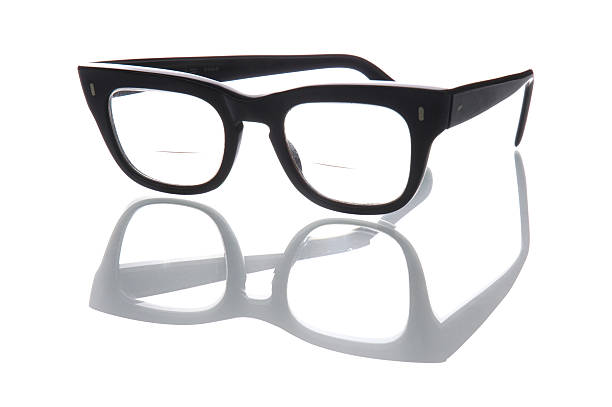 This is the standard industry choice.
- The Look: The reading segment is shaped like a sideways 'D' (flat on top, curved on the bottom).
- The Benefit: It is the easiest to adapt to. The distinct "flat top" line creates a clear visual jump, making it obvious where your reading zone starts so you don't get lost in the lens.
2. Round Segment (Round Seg)
- The Look: The reading area is a perfect circle at the bottom of the lens.
- The Benefit: The line is generally less noticeable than the Flat-Top, offering a slightly softer cosmetic look while still providing distinct vision zones.
3. The Executive (Franklin Style)
- The Look: The line goes all the way across the entire width of the lens, from ear to ear.
- The Benefit: This offers the massive advantage of a wide reading area. It is excellent for professionals like architects or accountants who need to scan wide blueprints or spreadsheets without constantly turning their heads.
Specialized Options: Sunglasses and Readers
Bifocals aren't restricted to your everyday clear glasses. You can add this functionality to specialized eyewear, too.
- Bifocal Reading Sunglasses: If you love reading at the beach but hate swapping glasses to see the water, these are a game-changer. The top of the lens acts as a standard sunglass (tinted, UV protection), while the bottom contains your reading magnification.
- Men's Bifocal Readers: These frames often feature non-prescription clear glass on top with a magnifier on the bottom. They are perfect for people who have perfect distance vision but need a boost for reading texts or workshop manuals.
Bifocals vs. Progressives: Which Should You Choose?
This is the most common question we encounter. Since both lenses correct distance and near vision, how do you decide? (See more in Progressive Lenses vs. Bifocals Guide)
Consider Bifocal Glasses If:
- You are sensitive to motion sickness. Because bifocals lack the peripheral blur of progressives, they offer a more stable image.
- You prioritize wide near vision. The reading area in a bifocal is typically wider and sharper than the narrow "corridor" found in a progressive lens.
- You want a budget-friendly option. Bifocals are generally more affordable to manufacture than complex progressive designs.
Consider Progressive Lenses If:
- Aesthetics matter to you. Progressives look exactly like single-vision glasses (no visible line), offering a more youthful appearance.
- You need "Intermediate" vision. If you work on a computer, progressives offer a middle zone specifically for screens; standard bifocals generally jump straight from "Distance" to "Read," skipping the computer distance entirely.
Find out how progressive lenses work in this complete guide covering types, costs, and benefits.
Final Thoughts: The Classic Choice for Clarity
There is a reason Benjamin Franklin's invention is still used nearly 250 years later: It works.
If you prioritize sharp, undistorted vision over the "invisible" look of modern lenses, bifocal glasses are an excellent choice. They are practical, durable, and offer an immediate adaptation period compared to multifocal lenses.
Ready to see clearly? Don't let the "line" scare you away. Browse Vooglam’s collection today and select "Bifocal" at checkout to customize your perfect pair of frames.