
[BOGO] Buy One Frame, Get Another 50% OFF

Customizing Your Blue Light Blocking Glasses
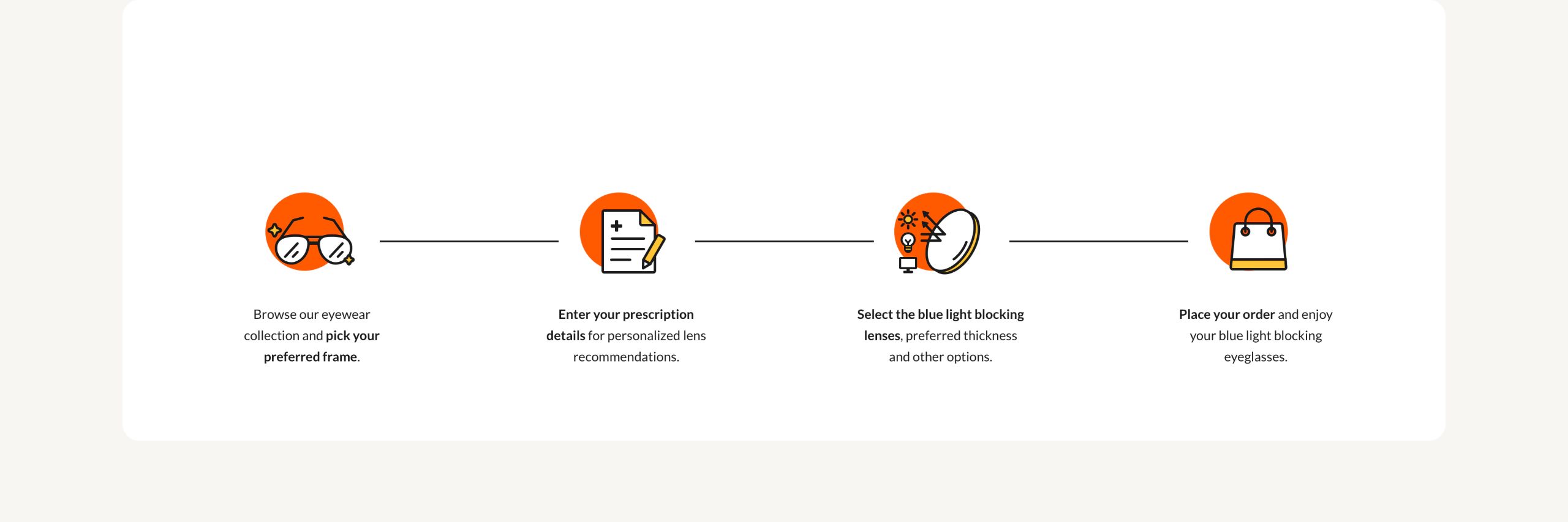
Follow these steps to customize blue light blocking glasses to your preferences
Find your favorite frames
Results: 0

There are no products matching the selection.Blue Light Blocking Glasses FAQ
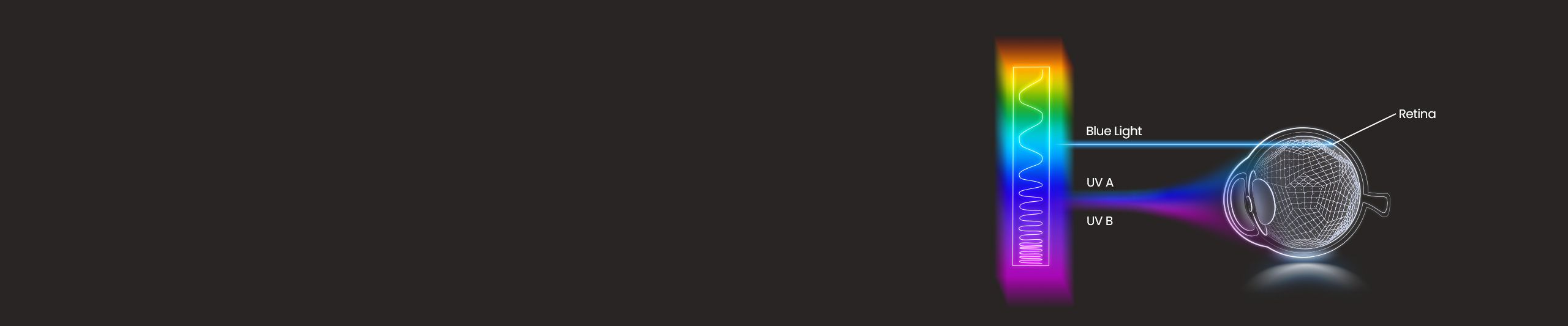
The concept of blue light blocking glasses originated in 1998 following the discovery of a direct link between blue light and brain activity. Scientists identified new photoreceptors in the eye, known as retinal ganglion cells (RGCs), which are particularly sensitive to blue light and have a direct connection to the brain.
1. Lens Color: Blue light lenses may show a slight yellow or orange tint to absorb blue light.
2. Coating: Blue light blocking glasses feature a special coating applied to the lenses. This coating is not visible but can be detected by an optician using specific equipment. If you have access to a blue light meter, you can test the glasses to see if they block blue light effectively. Shine a blue light source through the lenses and measure the output to see if it has been reduced.
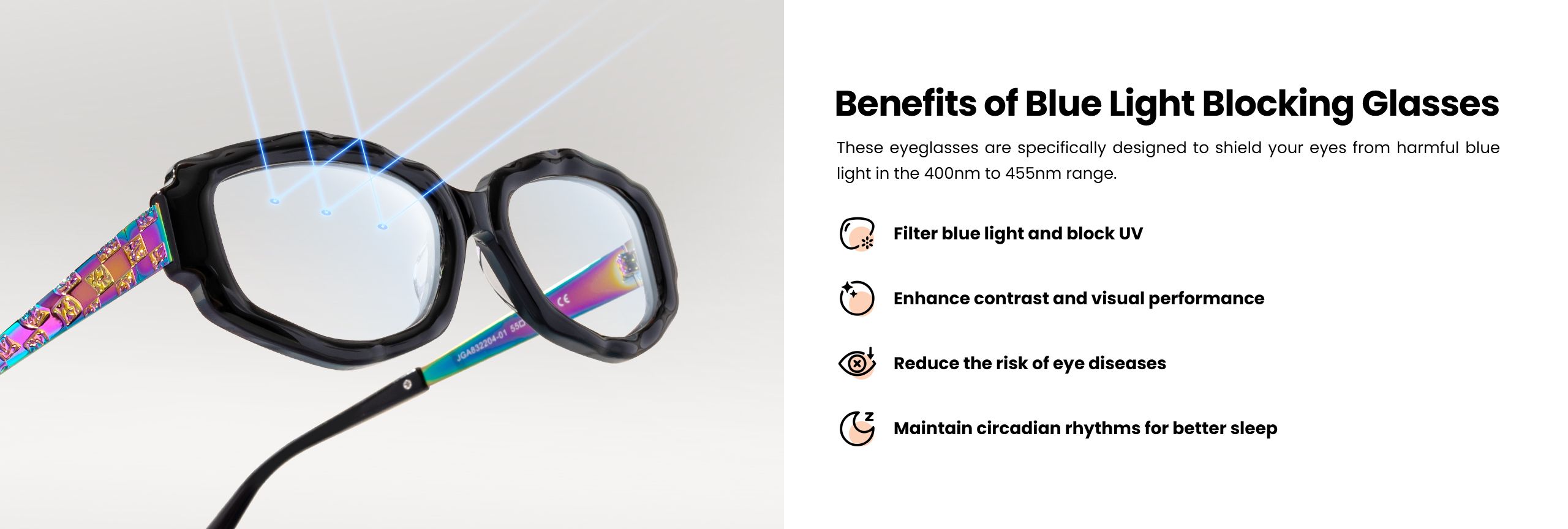
Blue light blocking glasses are equipped with lenses that filter out a portion of the blue light spectrum. This helps alleviate digital eye strain, may improve sleep quality, and potentially reduce the risk of certain health issues.
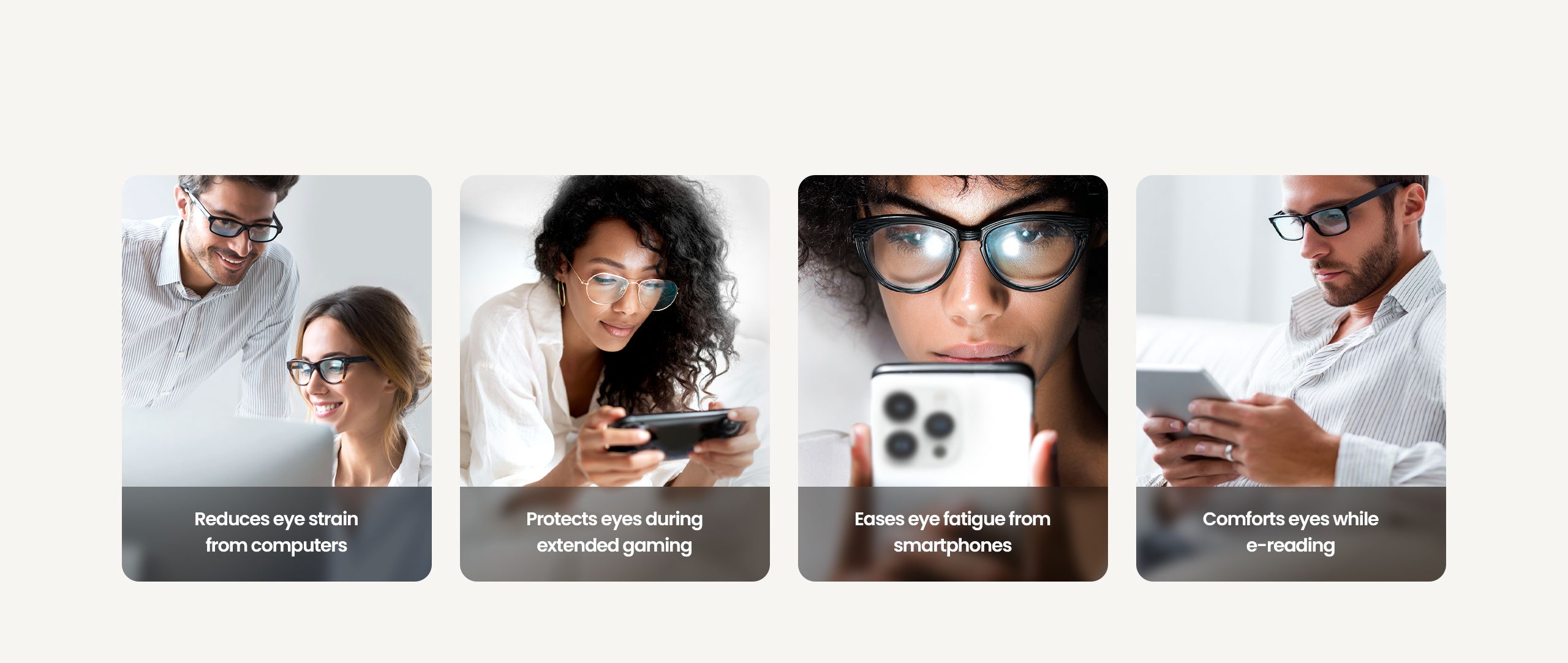
Considering blue light is prevalent in many digital devices, it's beneficial to wear blue light blocking glasses when using computers, smartphones, tablets, or other screens, especially with frequent or prolonged use.
No significant side effects have been reported with the use of blue light blocking glasses, as they're designed to filter out blue light without impacting screen visibility. However, it's recommended to consult a healthcare professional before adopting any new eyewear, particularly if you have any underlying health conditions.