
You open two boxes in your bathroom drawer. One contact lens box says “-3.50,” while your eyeglass prescription says “-3.75.” Did someone make a mistake?
Usually, no. If you have ever wondered whether glasses and contact lens prescriptions are the same, the short answer is no. Both correct your vision, but they are designed for lenses worn in different positions. Contacts also need to fit the surface of your eyes.
This guide explains why the numbers may differ, why you should never copy one prescription into the other, and how to use a valid eyeglass prescription when ordering prescription glasses online.
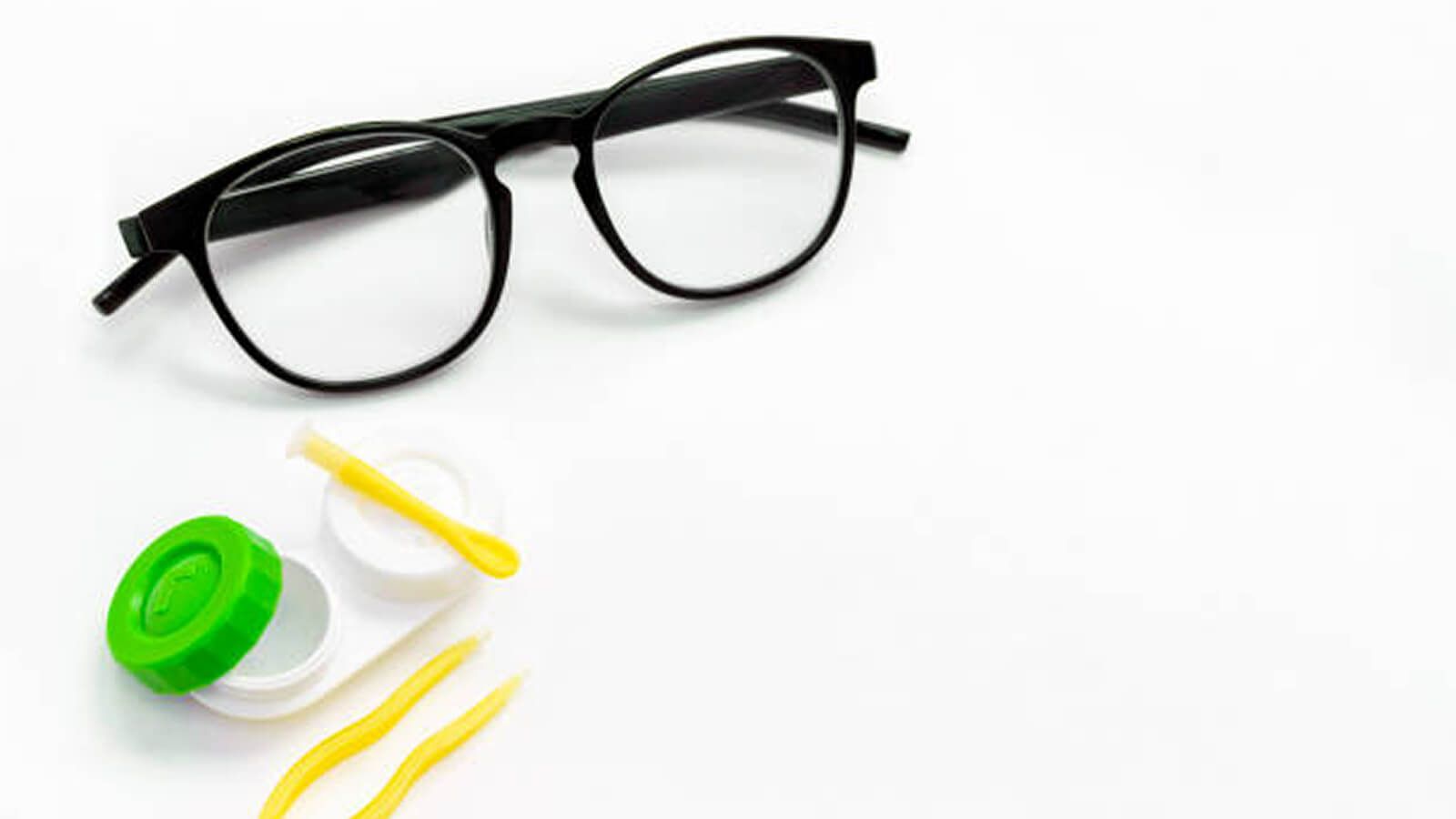
Why Are Glasses and Contact Prescriptions Different?
The main reason is vertex distance: the space between a corrective lens and the front of your eye.
Eyeglass lenses usually sit around 10 to 14 millimeters from the cornea, with 12 millimeters often used as a general reference. A contact lens rests on the tear film directly over the cornea. Moving a lens closer to the eye changes its effective optical power, especially when the prescription is stronger.
Distance is only part of the difference. An eyeglass prescription tells a lab how to place vision correction inside a frame. A contact lens prescription must also describe how the lens fits and moves on the eye.
That is why the prescriptions of glasses and contact lenses may share terms such as power, CYL, AXIS, or ADD while still requiring different values and fields.
Key Differences: Glasses Rx vs. Contact Lens Rx
| Prescription field | Eyeglass prescription | Contact lens prescription |
| Power/SPH | Lens power measured for the spectacle plane | Power measured for the corneal plane; it may differ after vertex adjustment |
| CYL and AXIS | Commonly listed for astigmatism | Toric lenses use available cylinder and axis parameters |
| Base curve (BC) | Not normally required | Describes the curvature or fitting designation of the lens |
| Diameter (DIA) | Frame and lens dimensions are handled separately | Lists the overall contact lens diameter when appropriate |
| PD | Positions the optical centers inside the frame | Usually not included in a soft contact lens prescription |
| ADD/prism | May include near ADD or prism | Multifocal contacts may include ADD; prism cannot be copied directly |
| Brand/material | Selected during the frame and lens ordering process | Often specifies the material or manufacturer |
| Fitting | Requires a refraction and frame measurements | Requires a contact lens evaluation and on-eye fitting |
A valid contact lens prescription may include power, material or manufacturer, base curve, diameter when appropriate, and an expiration date. This is one reason contacts with similar-looking numbers are not automatically interchangeable.
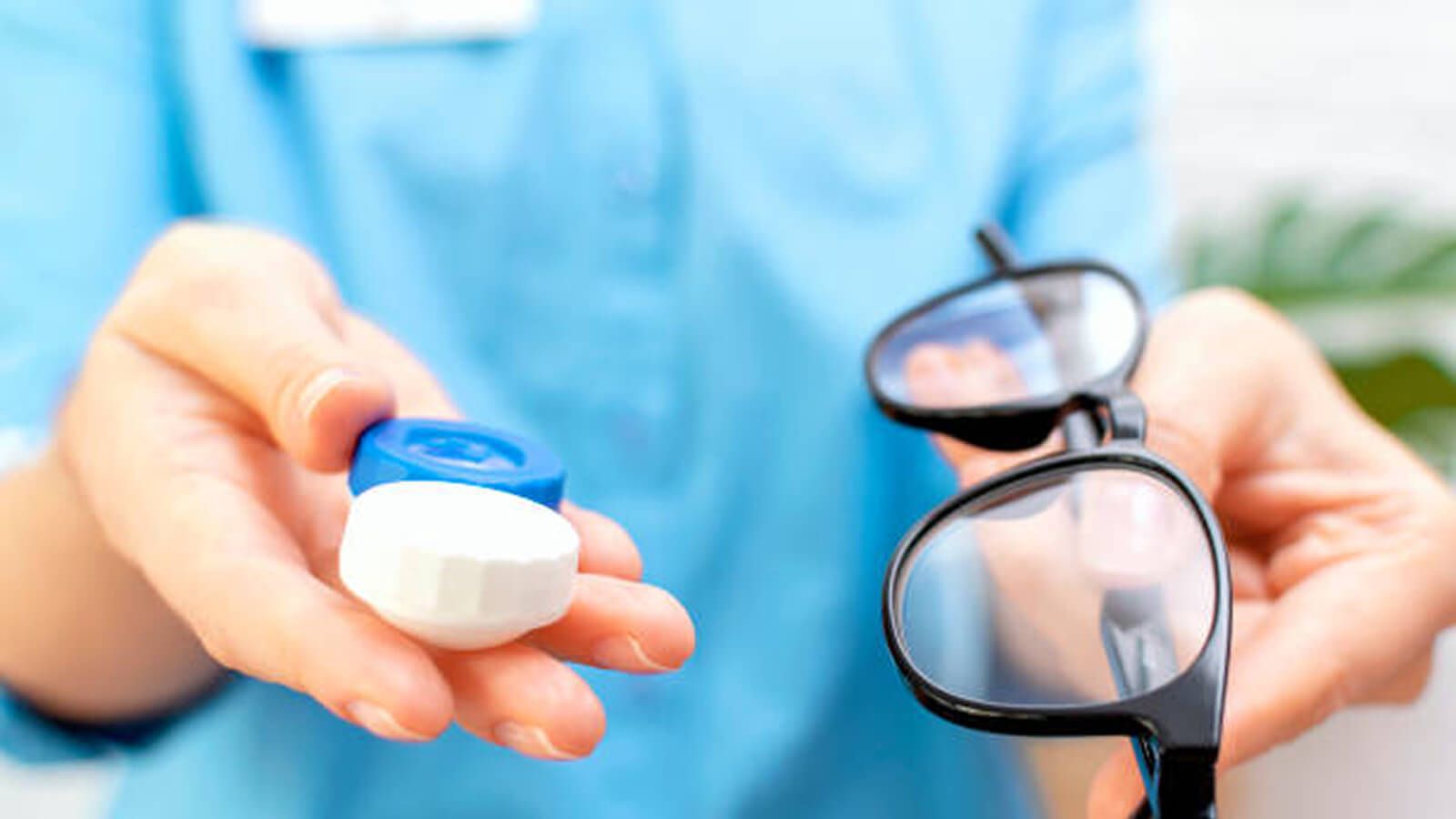
Can I Convert My Contact Lens Prescription to Glasses?
No—not as a do-it-yourself prescription for ordering eyewear.
Vertex compensation can estimate how lens power changes between the eyeglass plane and the corneal plane. It cannot provide the full refraction, PD, prism, or other measurements needed to make prescription eyeglasses.
The reverse is also unsafe. A glasses prescription does not include the base curve, diameter, material, or brand information needed to fit contacts.
The Critical Warning: Never Direct-Copy Your Numbers
Warning: Never enter your contact lens power into an eyeglass order. Never use an eyeglass prescription to buy contacts.
Seeing clearly for a short time does not prove that the power or fit is suitable. An unsuitable contact lens fit may affect comfort, vision, and corneal health.
Always purchase contacts with a valid contact lens prescription. Follow the wear, replacement, and care instructions provided by your eye care professional.
The +/- 4.00 Diopter Rule
Eye care professionals often use +/-4.00 diopters as a practical point at which vertex-distance adjustment deserves closer attention.
Below this range, the calculated difference may round to the same standard quarter-diopter power. At stronger powers, the difference can become more noticeable. For example, a -6.00 D spectacle lens positioned around 12 millimeters from the eye may convert to approximately -5.50 D at the corneal plane.
For minus prescriptions, the contact lens power is often less negative. For plus prescriptions, the contact lens power may become more positive.
However, the +/-4.00 rule is only a general guideline. It is not permission to convert your own prescription. Astigmatism, corneal shape, tear film, available lens parameters, lens movement, and your visual response can all affect the final contact lens Rx.
Any conversion should be completed and confirmed by a qualified eye care professional.
Glasses vs. Contacts: Choosing the Right Option for Each Scene
Neither option needs to replace the other completely. Many people switch between glasses and contacts depending on the day, the setting, and how their eyes feel.
When to Go with Contact Lenses
Contacts can work well for a running club, dance rehearsal, or another active plan. They move with the eye and do not slide down the nose. They also do not fog up or collect raindrops like eyeglass lenses.
However, contacts should not be exposed to water. Sports involving impact, dust, or flying debris may still require protective eyewear.
Contacts can also leave the brow and eye area visually open when makeup is the focus. There is no frame touching the bridge or sitting over the finished look.
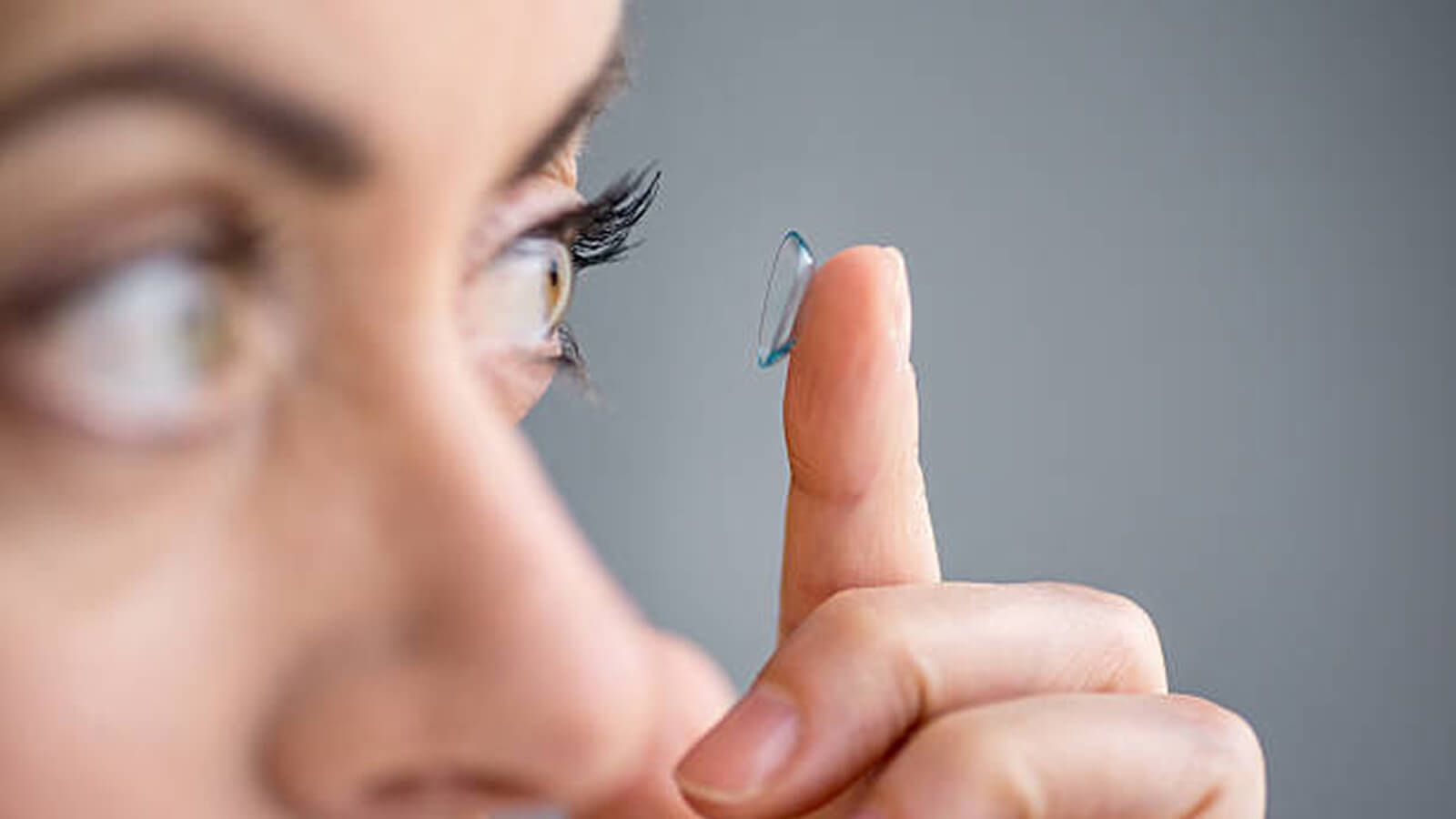
The trade-off is routine. You need clean hands, correct insertion and removal, and a replacement schedule approved by your prescriber. If your eyes become red, painful, or unusually watery, remove the lenses and contact an eye care professional.
When to Switch to Eyeglasses
Eyeglasses are often the easier option when your eyes feel dry, when you want a break from handling lenses, or when a desk day stretches into an evening editing session.
For greater screen comfort, take regular breaks, blink more often, adjust the surrounding light, and make sure your prescription is accurate. Blue-light-filtering lenses can be a personal preference for screen use, but they should not be presented as a treatment for digital eye strain or protection against eye disease.
Frames also change the visual rhythm of an outfit. A narrow metal frame can feel precise. Translucent acetate can soften a serious jacket. A geometric shape can become the main detail.
That makes glasses frames more than a backup option. They are vision correction you can style around your schedule, setting, and point of view.

Where to Find Professional Eyewear
Well-Known Contact Lens Brands
ACUVUE, CooperVision’s Biofinity family, and Alcon’s DAILIES lines are established contact lens names. Across their ranges, they offer options for daily or monthly replacement, astigmatism, and multifocal correction.
However, there is no universally “best” contact lens brand. Two products with the same power, base curve, and diameter may use different materials or designs and behave differently on the eye.
Start with an eye care professional rather than a brand list. Ask which material and replacement schedule suit your prescription, tear film, workday, and handling habits.
When buying contact lenses online, use the exact brand and parameters shown on your valid prescription. Do not substitute another model simply because the printed numbers look close.
Prescription Eyeglasses with a Strong Design Point of View
Prescription eyewear spans many design languages. Ray-Ban is known for recognizable archive shapes. MYKITA explores precise metal construction, while MOSCOT is associated with heritage acetate frames. These names are included as style references rather than a clinical ranking.
Vooglam is designed for shoppers who want a wider visual range when they buy glasses online. The collection moves from restrained metal to graphic acetate, with prescription lens options selected during checkout.
Instead of making eyewear disappear, Vooglam gives color, structure, and personal expression more room to be seen.
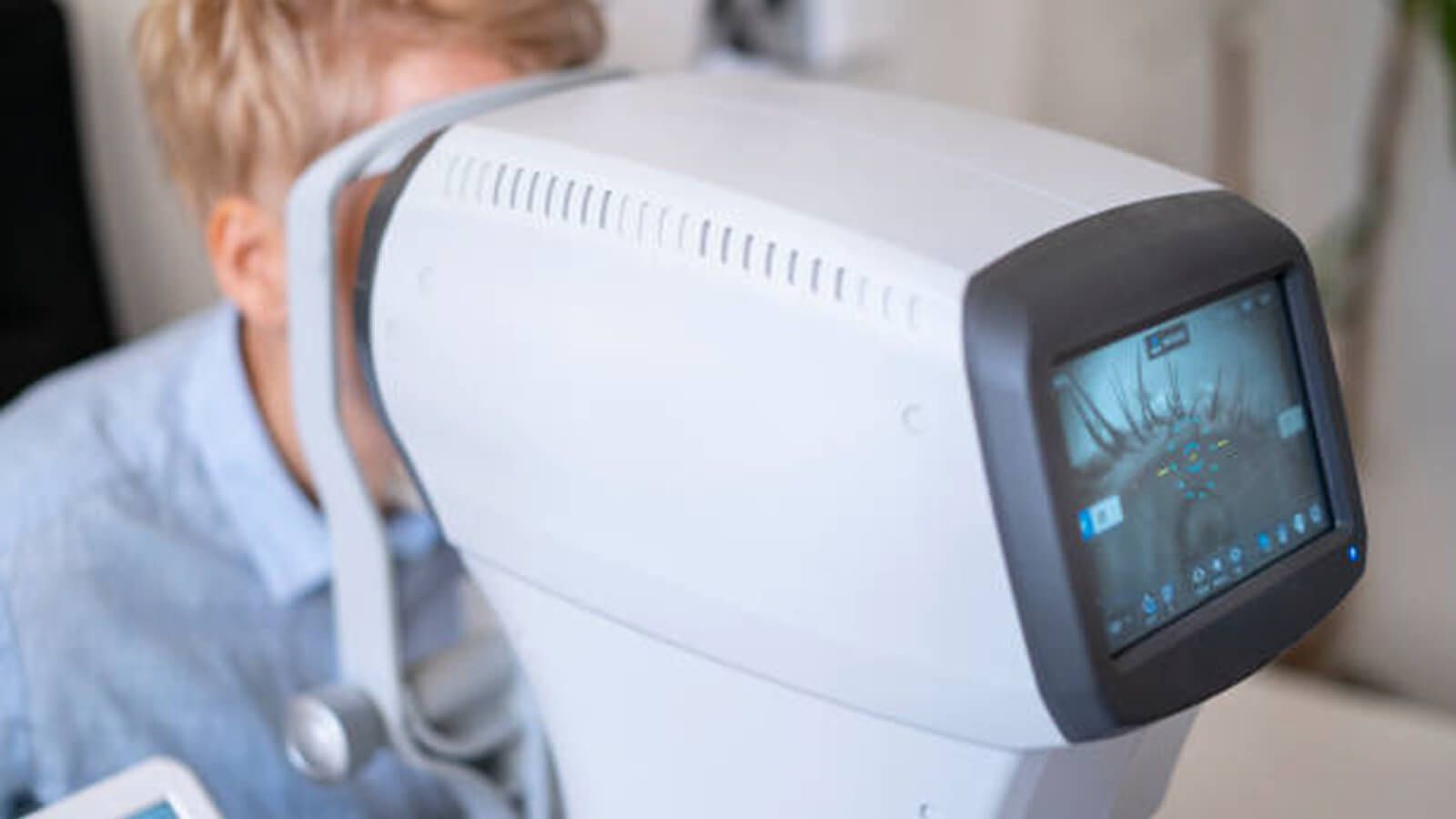
How to Order Prescription Glasses Online
Before placing an order, confirm that you have:
- A current eyeglass prescription—not a contact lens prescription
- Your distance PD
- Clearly written values for the right and left eyes
- Any required CYL, AXIS, ADD, or prism information
If the form is difficult to understand, read Vooglam’s How to Read Your Glasses Prescription guide before entering your numbers.
How to Read Your Glasses Rx
Here is a simple example showing how prescription fields map to an online form:
| Eye | SPH | CYL | AXIS | PD |
| OD/Right | -2.50 | -0.75 | 180 | 31.5 |
| OS/Left | -2.25 | -0.50 | 005 | 31.0 |
| Enter as | Sphere | Cylinder | Axis | Dual PD, or 62.5 total |
Sample only. This is not a usable prescription.
Keep every plus or minus sign exactly as written. OD means the right eye, while OS means the left eye. If your prescription provides two PD numbers, enter each number under the matching eye. If it provides one total PD, use the single-PD field.
To order through Vooglam:
- Choose your frame and select ADD LENS.
- Choose your prescription type, such as single vision or progressive.
- Enter or upload your eyeglass prescription.
- Match OD and OS before copying SPH, CYL, AXIS, ADD, prism, and PD.
- Select your lens option and review every value before checkout.
For more help, see How to Order Glasses Online and the PD Measurement Guide. If a value is missing or unclear, contact your prescriber instead of guessing.
Frequently Asked Questions
Can I Use My Glasses Prescription to Buy Contacts?
No. An eyeglass prescription lacks contact lens fitting information such as base curve, diameter when appropriate, and material or manufacturer.
Contacts also require an on-eye evaluation. Use a valid contact lens prescription for every contact lens purchase, including cosmetic or colored lenses.
Do Glasses and Contact Prescriptions Expire at the Same Time?
Not necessarily.
Prescription expiration dates vary by location, prescription type, and individual eye health. Contact lens prescriptions are often reviewed more frequently because the lenses sit directly on the eye.
Before ordering new glasses online or contact lenses, check the Expiration Date printed on the relevant prescription. Do not assume that both prescriptions expire at the same time.
One Prescription, One Purpose
Glasses and contacts may correct the same refractive error, but their prescriptions are not interchangeable. Vertex distance changes effective lens power, while contacts require fitting information that eyeglasses do not need.
Use each prescription only for the product it was written for. Check the expiration date and let a qualified eye care professional handle any conversion.
Now that your valid eyeglass prescription and PD are ready, explore Vooglam frames that bring clear vision and personal expression into the same look.
This article provides general information only. It is not a substitute for professional diagnosis, an eye examination, or a contact lens fitting.