
Guide to Picking Glasses That Suit Your Face Shape Perfectly
February 27,2023
What is Boho Style? A Comprehensive Guide to Boho-Chic Fashion
February 13,2025

Virtual Glasses Try On - Find Your Perfect Pair Online
April 02,2024
UV Protection vs. Blue Light Glasses: Understanding the Core Differences
July 20,2023

The Ultimate Guide to Modern Trendy Men's Glasses: Top Styles for 2026
March 01,2024
Stylish Reading Glasses: Blending Fashion with Functionality
February 16,2023
Photochromic Lenses 101: How They Work & Why You Need Them
September 22,2023
Brown Eyes: The Beauty of the Most Common Hue
September 01,2024

Best Glasses for Round Faces and Fuller Cheeks
August 02,2023
What are prisms in eyeglasses?
March 20,2023
What Are Bifocal Glasses? The Complete Guide (Types, History & Benefits)
April 14,2023
How to Read Your Eyeglass Prescription?
March 11,2023
Do Night Driving Glasses Work? Science vs. Hype
By Vooglam
Share this article

A pair of bright LED headlights can turn a familiar road into a field of glare. Signs become harder to read, lane markings fade, and every light seems to stretch into a halo. It is easy to understand the appeal of yellow night driving glasses, often sold as night vision glasses that promise better contrast and less glare.
The problem is that a more comfortable-looking view is not always a clearer or safer one. Night vision depends on preserving the limited light available, while every tinted lens blocks some of that light. So, do night time driving glasses actually work? The answer starts with understanding what yellow lenses change—and what may really be causing the glare.
The Science Behind Yellow Night Driving Glasses
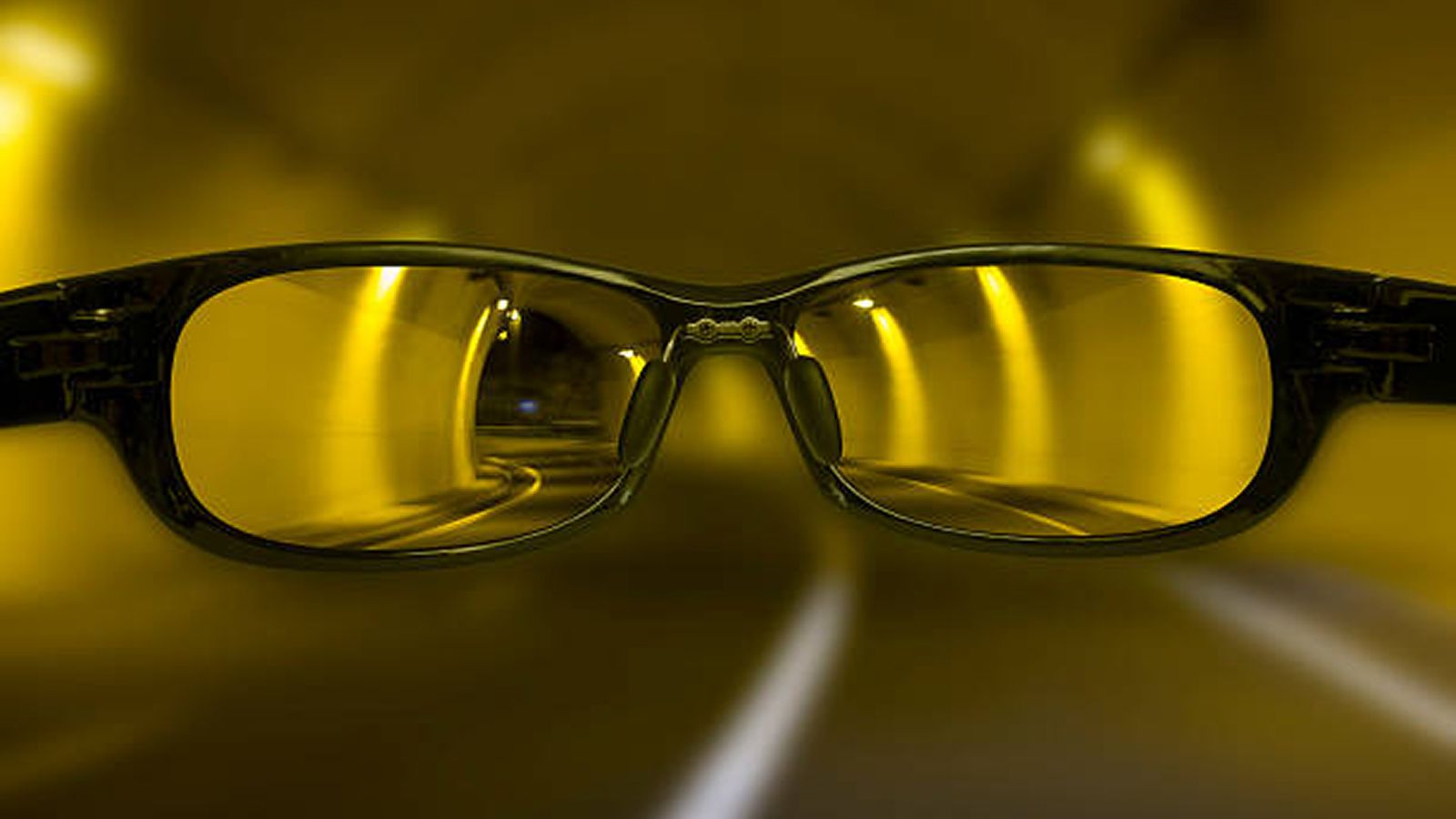
Most glasses marketed for night driving use pale yellow or amber lenses. These filters reduce part of the shorter-wavelength visible light entering the eye and give the road a warmer color cast.
This change can make headlights appear softer. Some boundaries may also seem more noticeable because the overall color balance has shifted. However, a scene that looks different does not necessarily contain more useful visual information.
The Contrast Illusion
White headlights look warmer through yellow lenses, which may make them feel less intense. That immediate change can give the impression of better contrast. Yet perceived comfort and actual hazard detection are two separate measures.
A simulated-driving study compared three commercially available yellow lenses with clear lenses. Twenty-two participants completed nighttime driving scenarios with and without oncoming headlight glare. Yellow lenses did not improve pedestrian detection time in any tested condition. They also did not reduce the negative effect of glare on detection performance.
The study was relatively small, so it cannot represent every driver or every yellow lens. Still, its results do not support one of the central claims made for yellow night driving glasses: that they help drivers identify people or hazards sooner after dark.
Every Tint Comes With a “Light Tax”
At night, your eyes work with far less light than they do during the day. They depend on the small amount reflected from signs, road markings, vehicles, cyclists, animals, and pedestrians.
Every tint absorbs some incoming light. Even a pale yellow filter adds a small “light tax.” On a well-lit street, that reduction may be hard to notice. On a dark suburban road, however, low-contrast objects already provide very little visual information.
This does not mean that nobody finds yellow night vision glasses comfortable. A warmer view may feel less harsh to some wearers. But reduced discomfort does not prove that the driver can see farther, respond faster, or detect a dark object sooner.
That is why generic tinted night time driving glasses should not be treated as a complete solution to nighttime glare.
What Is Really Causing Nighttime Glare?
If headlights have recently started looking brighter, larger, or more distorted, the color of the light may not be the main problem. The cause can sit anywhere along the visual path—from the windshield to the prescription in front of your eyes.
Uncorrected Nearsightedness or Night Myopia
A small amount of nearsightedness may be manageable during the day. At night, lower contrast and larger pupils can make the same blur much more noticeable. Headlights may lose their defined edges and expand into soft halos.
Some people also experience night myopia, a shift toward nearsightedness under low illumination. A 2023 clinical study found that this shift varies considerably between individuals. This makes a personal vision assessment more useful than relying on one generic lens tint for every driver.
If road signs look clear in daylight but become difficult to read at night, an updated prescription may restore more useful detail than a yellow filter. Correcting the focus problem addresses the source of the blur instead of simply changing its color.
Astigmatism and Other Eye Changes
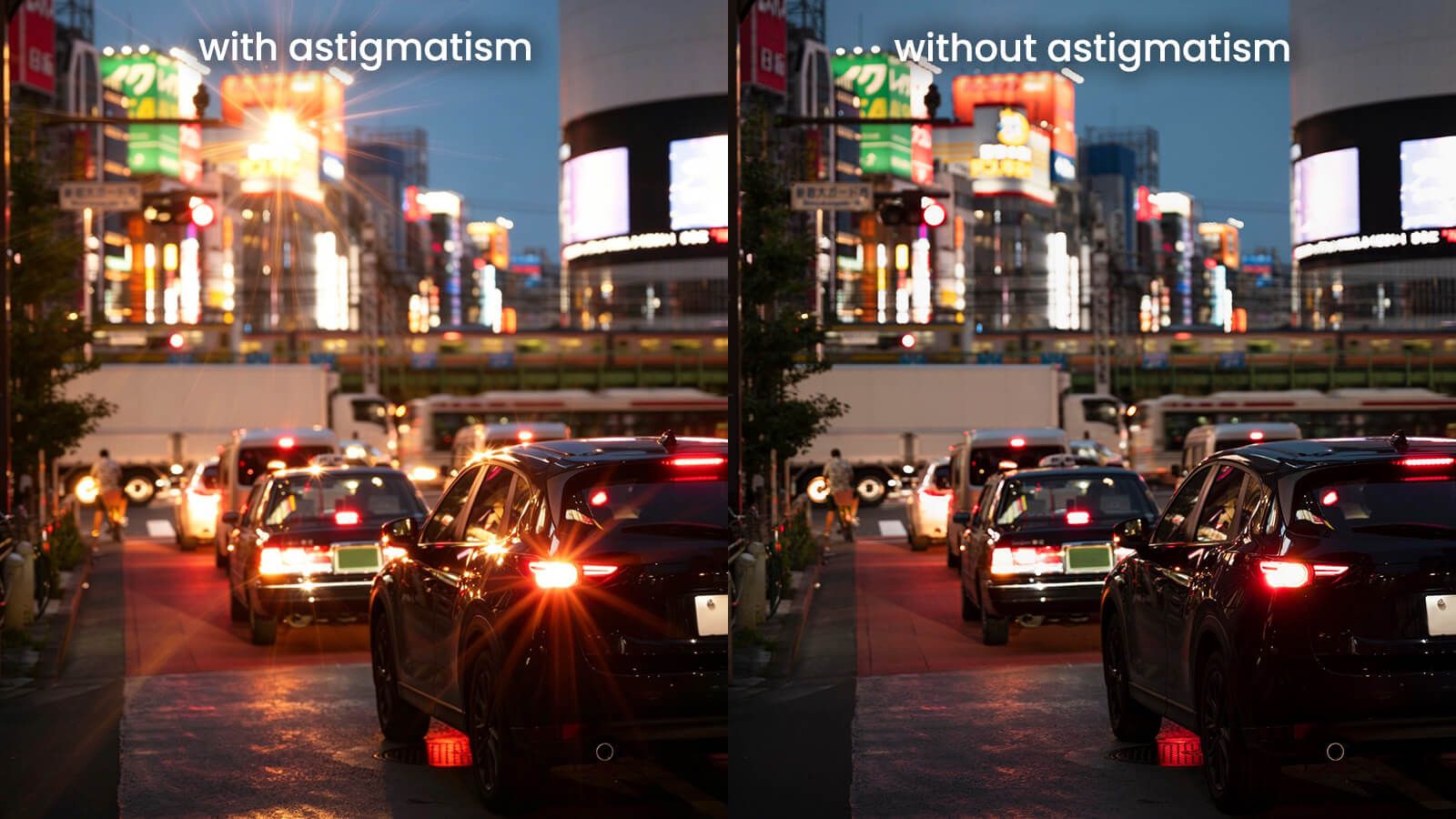
Astigmatism causes light to focus unevenly. At night, this can make traffic lights and headlights appear stretched, doubled, or surrounded by starburst patterns. Mild astigmatism may go unnoticed until a dark road makes the distortion easier to see.
Blurred vision, eye strain, and trouble seeing at night can all be associated with astigmatism. Glasses or contact lenses can correct it, but an existing prescription may need to be updated when symptoms change.
New or worsening glare may also be linked to dry eye, cataracts, corneal changes, or other eye conditions. A 2024 systematic review found an association between visual function and road traffic accidents, although the strength of that relationship differed across the visual measures examined.
If glare has changed suddenly or is accompanied by blurred vision, double vision, pain, or persistent halos, do not try to cover the symptom with tinted glasses. Arrange a professional eye examination.
Windshield Film and Dirty Lenses
Sometimes the issue is not inside the eye at all. A windshield can look clean during the day while still carrying road residue, water spots, fingerprints, or a thin oily film on the inside.
At night, these layers scatter incoming headlights across the glass. A defined beam becomes a larger veil of light. Dust, fingerprints, and fine scratches on eyeglasses can produce a similar effect.
Before buying new night driving glasses, clean both sides of the windshield and inspect your eyeglass lenses under a bright lamp. Glare is often amplified by several imperfect surfaces at the same time.
How to Reduce Glare When Driving at Night
There is no single pair of glasses that can remove every source of nighttime glare. A more practical approach is to improve the full visual path: your prescription, your lenses, the windshield, and the way the vehicle is set up.
Step 1: Begin With an Updated Eye Exam
If night glare is new, severe, or becoming harder to manage, begin with a comprehensive eye exam. Even a small change in nearsightedness or astigmatism can become more obvious under dim conditions.
An examination can help identify whether the problem comes from an outdated prescription, dry eye, cataracts, or another change that needs attention. This is especially important if glare appears with headaches, double vision, blurred distance vision, or difficulty identifying lanes and pedestrians.
A colored filter may alter how those symptoms look. It cannot correct their underlying cause.
Step 2: Choose Clear Prescription Lenses
For nighttime driving, clear lenses preserve more available light than yellow, amber, gray, or other tinted lenses. No eyeglass lens transmits a literal 100% of incoming light, but an untinted lens avoids the additional reduction produced by a color filter.
Prescription accuracy matters just as much as lens color. Clear lenses made to your current prescription can bring road signs, lane markings, and distant objects back into focus.
If you are looking for practical night driving glasses, Vooglam allows you to pair a chosen frame with clear prescription lenses based on your vision needs. This gives you one complete pair rather than placing a generic yellow clip-on over an outdated or unsuitable prescription.
Step 3: Consider an Anti-Reflective Coating
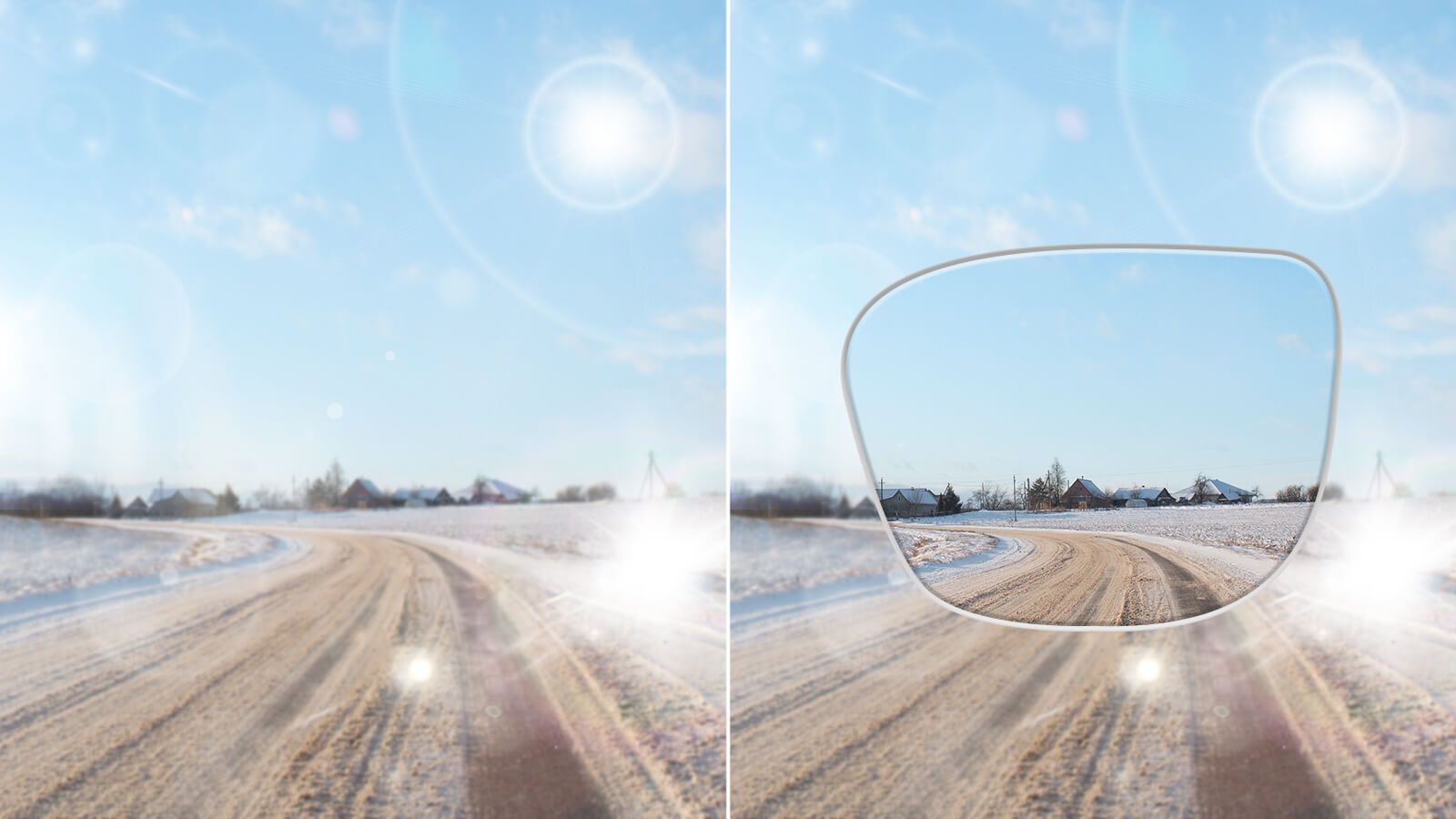
Light can reflect from both the front and back surfaces of an eyeglass lens. Around headlights, traffic signals, and illuminated signs, these reflections may appear as distracting secondary images.
An anti-reflective coating uses thin optical layers to reduce reflections created by the lens surfaces. It cannot remove glare produced inside the eye, correct an inaccurate prescription, or compensate for a dirty windshield. Its purpose is more specific: limiting reflections from the eyeglass lenses themselves.
For this reason, clear anti reflective coating glasses may be a practical option for many prescription wearers. The exact result depends on the lens material and coating system, so fixed claims about eliminating all glare should be treated carefully.
The useful benefit of ar coating glasses is reduced lens reflection—not a promise that every headlight will stop feeling bright.
At Vooglam, you can choose a frame and customize it with clear prescription lenses and an anti-reflective coating. This lets you build night driving glasses around optical clarity while keeping the frame expressive and personal.
More Ways to Make Night Driving Comfortable
Your glasses are only one surface between the road and your eyes. These adjustments can also help reduce distracting glare:
- Clean the windshield inside and out. Remove oily film, fingerprints, dust, and streaks with a suitable automotive glass cleaner and clean microfiber towel.
- Keep your glasses clean. Residue can scatter light across the lens. Even good anti reflective glasses cannot perform well when covered in fingerprints.
- Lower dashboard brightness. Keep the controls readable, but avoid a bright display that competes with the dark road ahead.
- Use the mirror’s night setting. A manual anti-glare tab or automatic dimming mode can reduce glare from vehicles behind you.
- Look toward the lane edge. When an approaching vehicle is especially bright, use the right-side lane marking as a visual guide rather than staring into the headlights.
- Slow down when visibility drops. Increase your following distance. If glare prevents you from seeing the road clearly, pull over in a safe location.
Conclusion: Choose Clarity Over Tinted Hype
Yellow night driving glasses can make headlights look warmer and may feel more comfortable to some drivers. Current evidence, however, does not show that they improve nighttime pedestrian detection. Because every tint reduces some incoming light, yellow night time driving glasses may also make low-contrast hazards harder to see on dark roads.
A better approach begins with an updated eye exam, an accurate prescription, clean lenses, a clean windshield, and clear ar coating glasses that reduce reflections from the lens surfaces. If you want to move beyond generic yellow filters, explore Vooglam’s frame selection and customize a pair with clear prescription lenses and an anti-reflective coating. The result can support clearer vision while still reflecting your point of view.
This article provides general information and is not a substitute for professional diagnosis.
Frequently Asked Questions
What Glasses Are Best for Driving in Bright Sunlight?
Polarized sunglasses can reduce reflected glare from surfaces such as wet roads, water, and vehicle hoods. They should also provide 99% to 100% UVA and UVB protection or carry a UV400 label. Polarization and UV protection are different functions: one reduces reflected glare, while the other blocks ultraviolet radiation.
If you need vision correction, Vooglam supports prescription polarized sunglasses, allowing distance correction and glare reduction to sit in one complete pair instead of adding a clip-on over regular glasses.
Does Anti-Reflective Coating Wear Off?
Anti-reflective coating can become damaged over time, but there is no fixed lifespan for all anti reflective coating glasses. Coating quality, heat exposure, scratches, cleaning habits, and everyday handling all affect durability.
Avoid leaving ar coating glasses on a hot dashboard or inside a high-temperature vehicle. Use a suitable lens-cleaning product and a clean microfiber cloth. Clothing, paper towels, and tissues may carry particles that leave fine scratches on the coating.

Vooglam Blog
Vooglam blog shares professional knowledge about eyeglass frames, lenses, etc., and provides help when purchasing and using eyewear products. At the same time, Vooglam focuses on fashion glasses to interpret the trend of glasses for you.