
Blurred street signs, tired eyes after reading, doubled text, and the need to hold your phone farther away can look like unrelated problems. In many cases, they point to refractive error: a difference between how your eye bends light and where that light needs to land.
If you have searched what are eye refraction problems, this guide breaks down the answer without turning it into a medical textbook. We will explain the four common refractive errors, show how to read Rx prescription for glasses, and help you understand which Rx glasses for refractive errors may suit your vision and daily routine.
This article provides general information and is not a substitute for professional diagnosis or a comprehensive eye examination.
How Your Eye Focuses Light: The Camera Analogy
Think of your eye as a high-resolution camera with a lens that directs light and a sensor that captures the image.
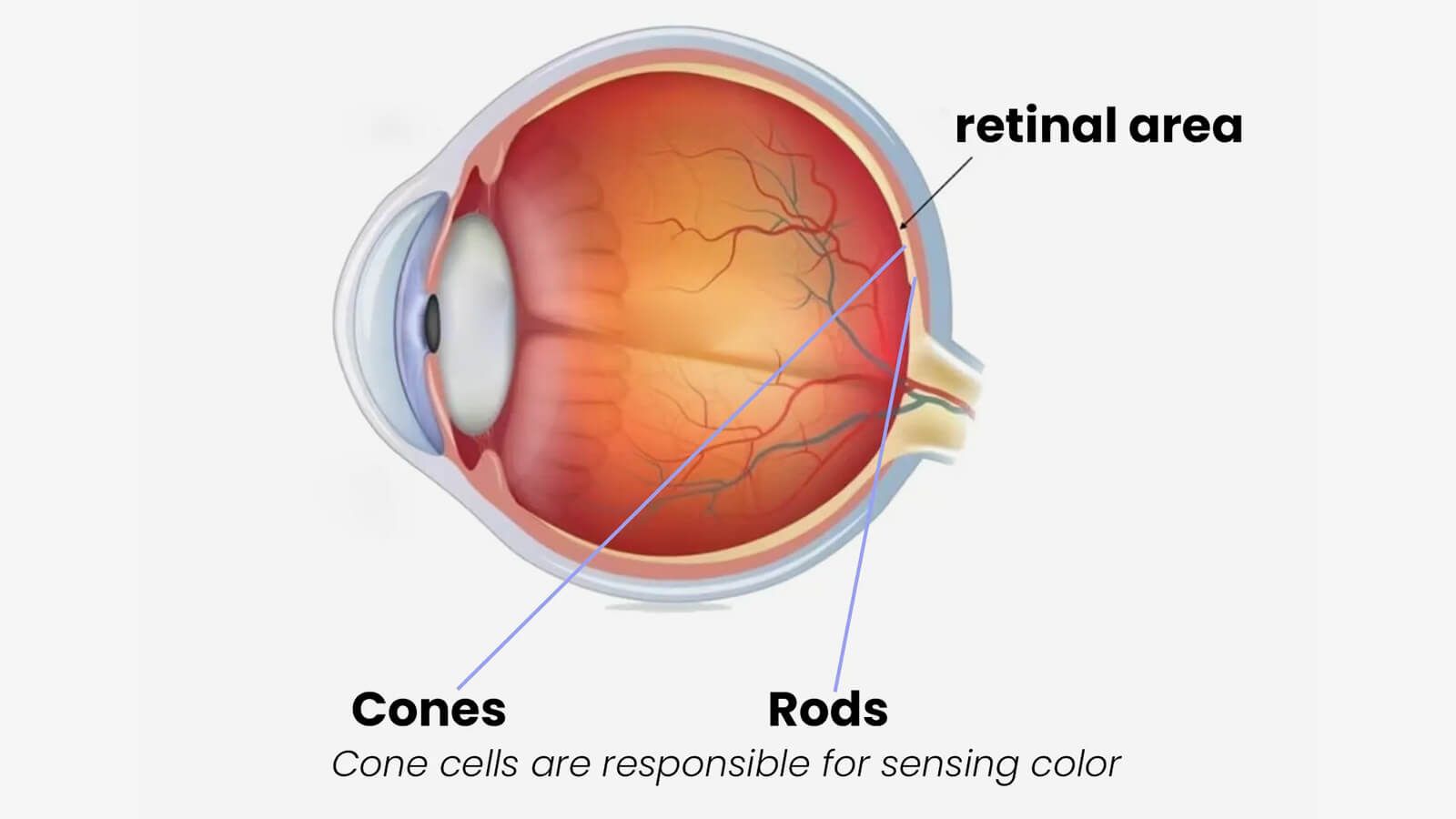
The cornea and crystalline lens act like the camera lens. The cornea provides much of the focusing power, while the flexible lens fine-tunes different distances. Together, they refract incoming light.
The retina is the image sensor: light-sensitive tissue that receives the focused image and sends visual information to the brain. Its central fovea provides the sharp detail used for reading and recognizing faces.
In an eye without a refractive error, parallel light rays focus clearly on the retina. When the eye is too long, too short, or shaped in a way that bends light unevenly, the focal point lands in the wrong place. All refractive errors of the eyes begin with this mismatch. That is the simplest answer to what are eye refraction problems: light is not focusing precisely where the retina needs it.
The National Eye Institute identifies myopia, hyperopia, astigmatism, and presbyopia as the four common refractive errors. Each changes focus differently and requires a different prescription approach.
The 4 Main Types of Eye Refraction Problems & Solutions
The words on an eye exam can sound technical, but the underlying logic is simple: identify where or how light is focusing, then use the correct lens power to redirect it. Vooglam’s guide on how to read a glasses prescription can help you connect each condition with the numbers on your Rx.
1. Myopia (Nearsightedness)
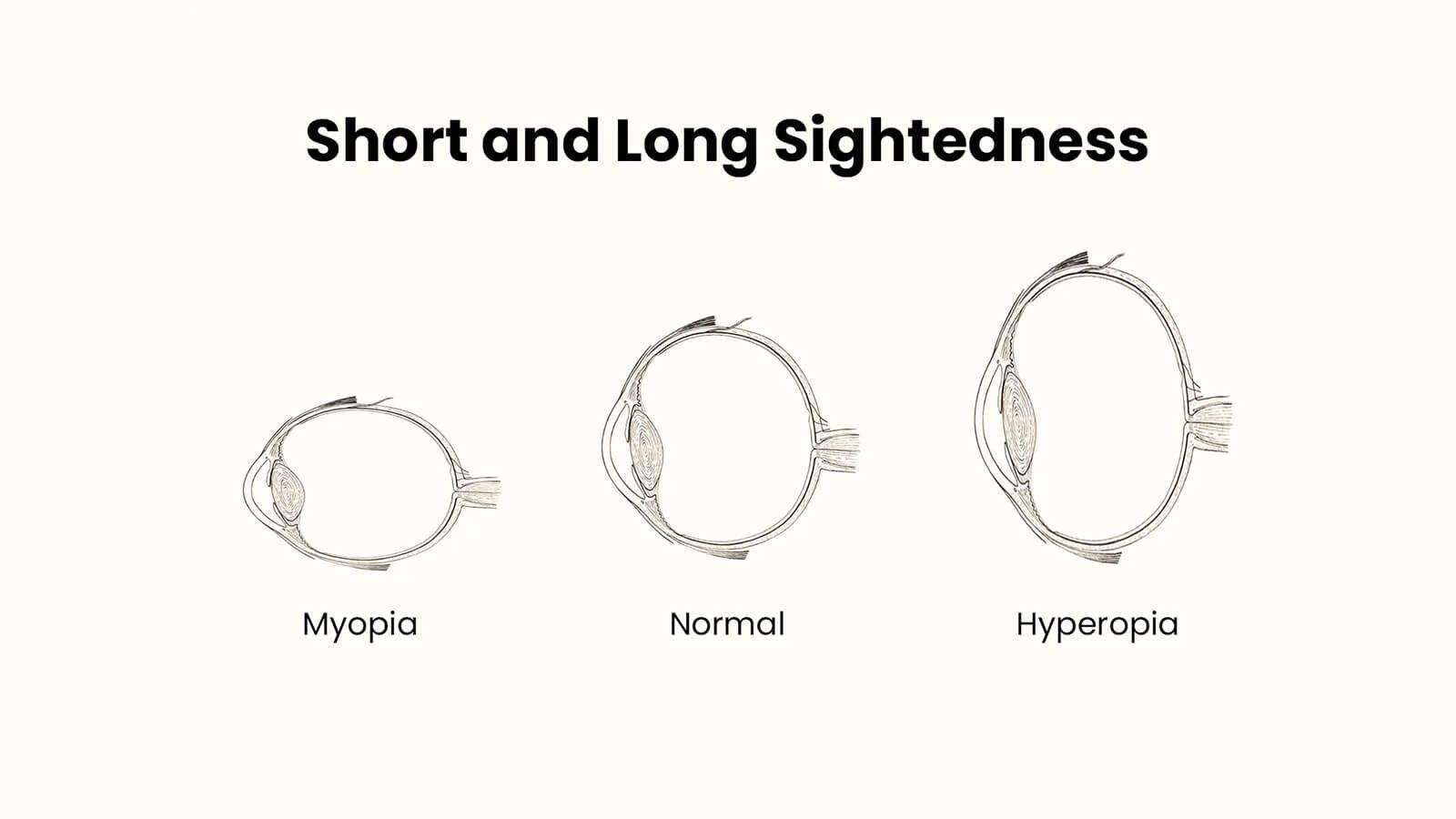
With myopia, light focuses in front of the retina instead of directly on it. This often happens because the eyeball has grown too long from front to back. The shape of the cornea or lens can also contribute.
Near vision remains clear, but road signs, presentation screens, and other distant details look blurred. Squinting may briefly improve detail but does not correct the underlying focus.
Myopia appears as a minus SPH value, such as -1.50. Concave minus lenses spread incoming light slightly, moving the focal point back onto the retina. Many people who only need distance correction use single-vision Rx glasses for refractive errors.
For higher myopia, a suitable high-index lens can create a slimmer profile. Final thickness also depends on frame size, shape, pupil position, and prescription strength. A smaller full-rim frame can help reduce and conceal thick edges.
2. Hyperopia (Farsightedness)
With hyperopia, the eye’s natural focal point falls behind the retina. A shorter-than-average eyeball is a common reason, although the cornea or lens can also affect the result.
Near work is often harder, but “farsighted” does not always mean perfect distance vision. Younger eyes may compensate through accommodation, creating tired eyes, headaches, or unstable focus after prolonged close work.
Hyperopia usually appears as a plus SPH value. Convex plus lenses bring light together sooner so it can focus on the retina with less effort. They may be prescribed for reading or all-day wear.
Do not select plus power only by testing reading distance. A professional refraction checks each eye separately and identifies any accompanying astigmatism.
3. Astigmatism
Astigmatism occurs when the cornea or lens bends light differently across its meridians. It is often compared with a football rather than a round soccer ball. Instead of one clean focus, light focuses at different positions.
Near and far vision may look blurred or distorted. Text can appear shadowed, while headlights may produce streaks, halos, or glare. Astigmatism can accompany myopia or hyperopia.
CYL shows the amount of astigmatism correction, while AXIS gives its orientation from 1 to 180 degrees. The values work together to place the required power in the correct direction.
Vooglam can make customized Rx lenses using the SPH, CYL, and AXIS supplied by your eye-care professional. If you want a closer explanation, see the guide to SPH, CYL, and AXIS in an eye prescription.

4. Presbyopia: An Age-Related Vision Change
Presbyopia develops as part of normal aging. The natural lens becomes harder and less flexible, gradually reducing the eye’s ability to focus up close.
The classic sign is holding a phone farther away. Small text blurs at a normal reading distance, especially in dim light. Presbyopia commonly becomes noticeable after age 45, although timing differs.
Reading glasses can provide the extra plus power needed for close work. A prescription pair can account for differences between the eyes and any astigmatism.
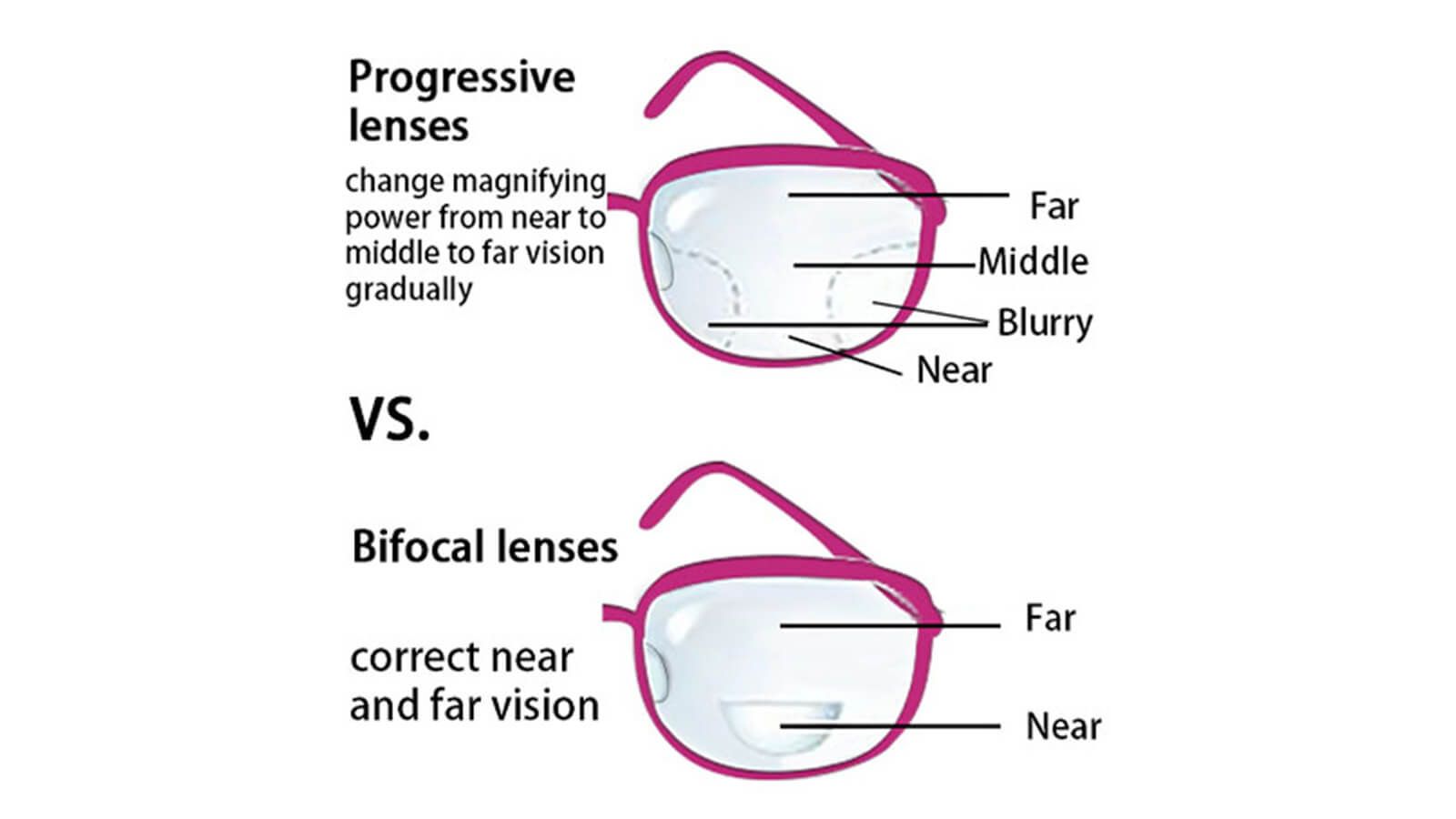
When presbyopia occurs alongside another refractive error, progressive lenses combine distance, intermediate, and near correction without a visible dividing line. Vooglam’s bifocal and progressive lens guide explains the options.
What Triggers Refractive Changes in Daily Life?
Understanding the refractive errors of the eyes means separating structural causes from daily habits. Tired eyes do not always mean the prescription has changed.
Genetics and Eye Development
Family history affects refractive-error risk. Genes influence eye growth, axial length, and corneal shape. Myopia often begins during childhood, while hyperopia is frequently present from birth.
Eye development reflects both inherited and environmental influences. Regular exams matter when refractive errors run in the family or a child begins squinting or struggling to see at school.
Screens, Near Work, and Visual Fatigue
Long screen sessions can cause temporary blur, dryness, headaches, and difficulty refocusing. Reduced blinking, glare, small text, poor posture, and dim lighting can increase visual fatigue.
Screens do not directly and inevitably worsen myopia. A 2024 National Academies review found evidence connecting near work and electronic devices with myopia remains limited or inconclusive, while outdoor time has a clearer protective association for children.
Use screens in good light, enlarge text, blink often, and take distance-viewing breaks. Persistent blur or headaches require an exam because they may indicate one of the common refractive errors or another issue.

Clearer Vision Starts with the Right Prescription
The refractive errors of the eyes are manageable focusing differences. Myopia moves focus in front of the retina, hyperopia places it behind, astigmatism bends light unevenly, and presbyopia reduces near focus with age.
The solution begins with an eye exam and current prescription. Then choose Rx glasses for refractive errors that fit your routine: single vision, reading glasses, high-index lenses, or progressives for multiple distances.
Use Vooglam’s guide to enter the numbers accurately and turn precise correction into eyewear that feels personal. That is the practical answer to what are eye refraction problems and how they are corrected.
FAQ
How do I read the numbers on my Rx glasses prescription?
Learning how to read Rx prescription for glasses starts with three core entries:
- SPH (Sphere): The main lens power. A minus sign usually indicates myopia, while a plus sign indicates hyperopia or near-vision addition.
- CYL and AXIS: CYL shows the amount of astigmatism correction. AXIS shows its direction from 1 to 180 degrees.
- PD (Pupillary Distance): The distance between your pupils, used to position the optical centers of the lenses correctly.
ADD is extra near power for bifocal or progressive lenses. OD and OS mean the right and left eyes. These values form the foundation of how to read Rx prescription for glasses. For another example, use Vooglam’s prescription guide and enter every value exactly as written. Never substitute a contact lens prescription.
Can I turn progressive or bifocal prescriptions into sunglasses online?
Yes. Many progressive prescriptions can become prescription sunglasses, depending on the frame, prescription range, and lens option. Compatible Vooglam frames may offer tinted, polarized, or photochromic lenses.
Tinted lenses reduce brightness and add color. Polarized lenses cut reflected glare from roads and water. Photochromic lenses darken in activating light and return toward clear indoors. Confirm UV protection and multifocal compatibility for the exact lens selected.
Review Vooglam’s lenses and coatings guide, select Progressive as the prescription type when available, and enter the SPH, CYL, AXIS, ADD, and PD values exactly as prescribed.