
Guide to Picking Glasses That Suit Your Face Shape Perfectly
February 27,2023
What is Boho Style? A Comprehensive Guide to Boho-Chic Fashion
February 13,2025

Virtual Glasses Try On - Find Your Perfect Pair Online
April 02,2024
UV Protection vs. Blue Light Glasses: Understanding the Core Differences
July 20,2023

The Ultimate Guide to Modern Trendy Men's Glasses: Top Styles for 2026
March 01,2024
Stylish Reading Glasses: Blending Fashion with Functionality
February 16,2023
Photochromic Lenses 101: How They Work & Why You Need Them
September 22,2023
Brown Eyes: The Beauty of the Most Common Hue
September 01,2024

Best Glasses for Round Faces and Fuller Cheeks
August 02,2023

What are prisms in eyeglasses?
March 20,2023
What Are Bifocal Glasses? The Complete Guide (Types, History & Benefits)
April 14,2023

How to Read Your Eyeglass Prescription?
March 11,2023
Experimental Eyewear: When Glasses Become Wearable Art
By Vooglam
Share this article

From Function to Form
Walk into any gallery opening in Berlin, Tokyo, or New York and you'll notice something: the people who actually care about design aren't wearing Persol or Oliver Peoples anymore. They're wearing frames that look like someone ripped a chunk off a brutalist building, or extracted the double helix straight out of a biology textbook and figured out how to make it sit on your face.
The shift isn't about making glasses weird just to stand out. It's about recognizing that eyewear occupies some of the most visible real estate on your body. Why treat it like a medical device when you could treat it like wearable architecture?
What "Experimental" Actually Means Right Now
Here's what experimental doesn't mean: uncomfortable, impractical, or purely conceptual. The frames showing up in 2026 are built to be worn, not just photographed for design blogs.
The difference is in the starting point. Traditional eyewear design begins with "this shape flatters this face type" and works from there. Round faces get angular frames. Angular faces get round frames. It's predictable because it's been proven for decades.
Experimental designers throw that rulebook out entirely. They start with a structural question: what happens if we let the double helix of DNA determine the frame architecture? What if we surface a frame with actual mineral texture instead of smooth acetate? The shapes that emerge look nothing like conventional eyewear because they're following different logic.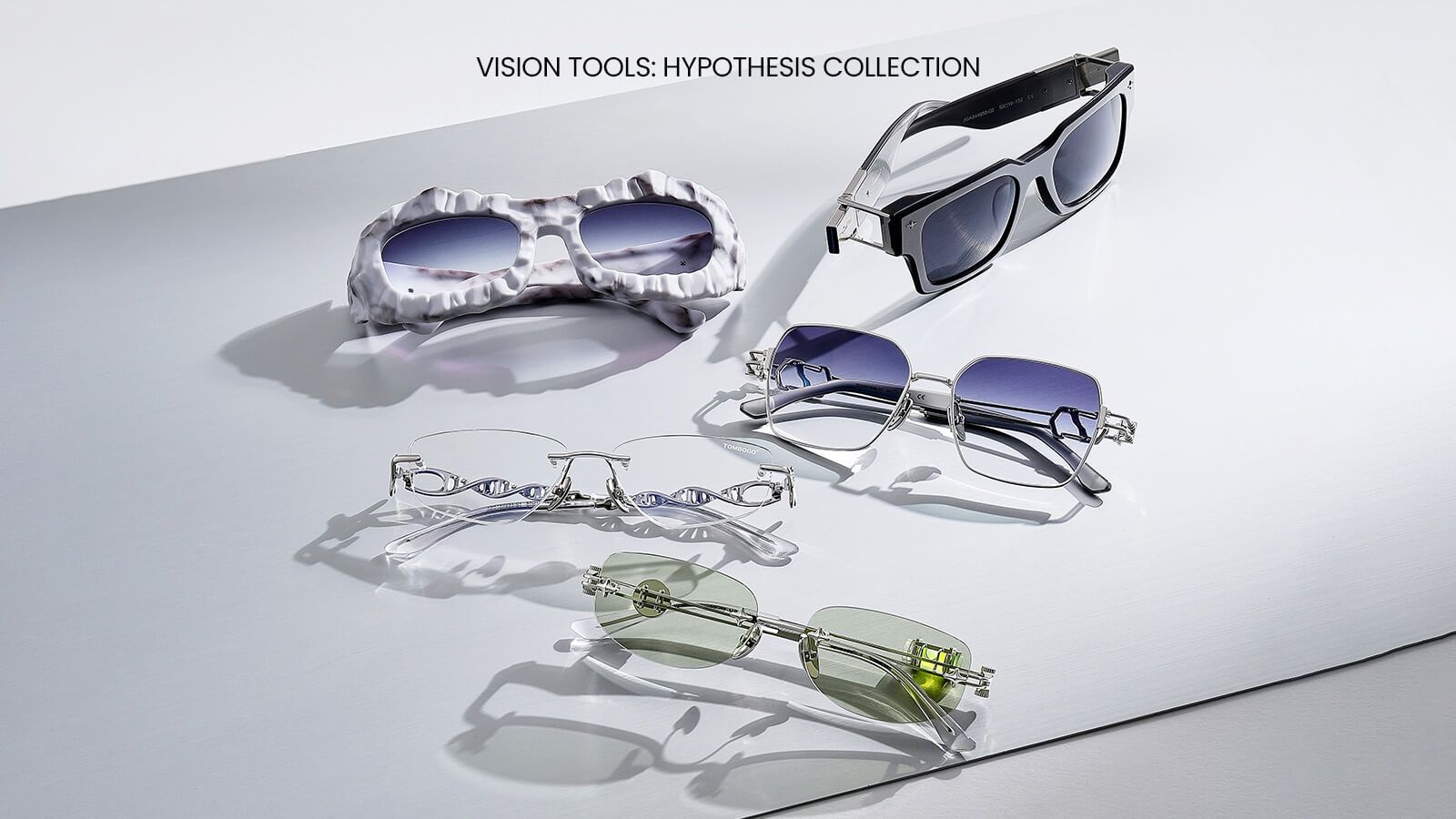
Curate Your Vision: View the Limited Series >>
The Bio-Futurist Approach: The Decoder
The Decoder uses DNA's double helix as its structural spine. Not as decoration—as actual architecture.
Look at how DNA works: the helix creates strength through geometry rather than bulk. It's been stable for billions of years not because it's thick or heavy, but because the form itself is structurally sound. The Decoder applies that same principle. The spiraling form holds the frame together without requiring traditional thickness or weight.
The frameless construction makes this even more apparent. Without heavy acetate borders, the helix seems to float. Designers call this "visual porosity"—you see the structure and the face simultaneously. The frame exists but doesn't dominate.
This is what bio-futurism means when done correctly. You're not just copying organic shapes because they look cool. You're studying how nature solves engineering problems and applying those lessons to human design. The double helix isn't beautiful because it resembles something natural—it's beautiful because it's the most efficient solution to a complex structural challenge.
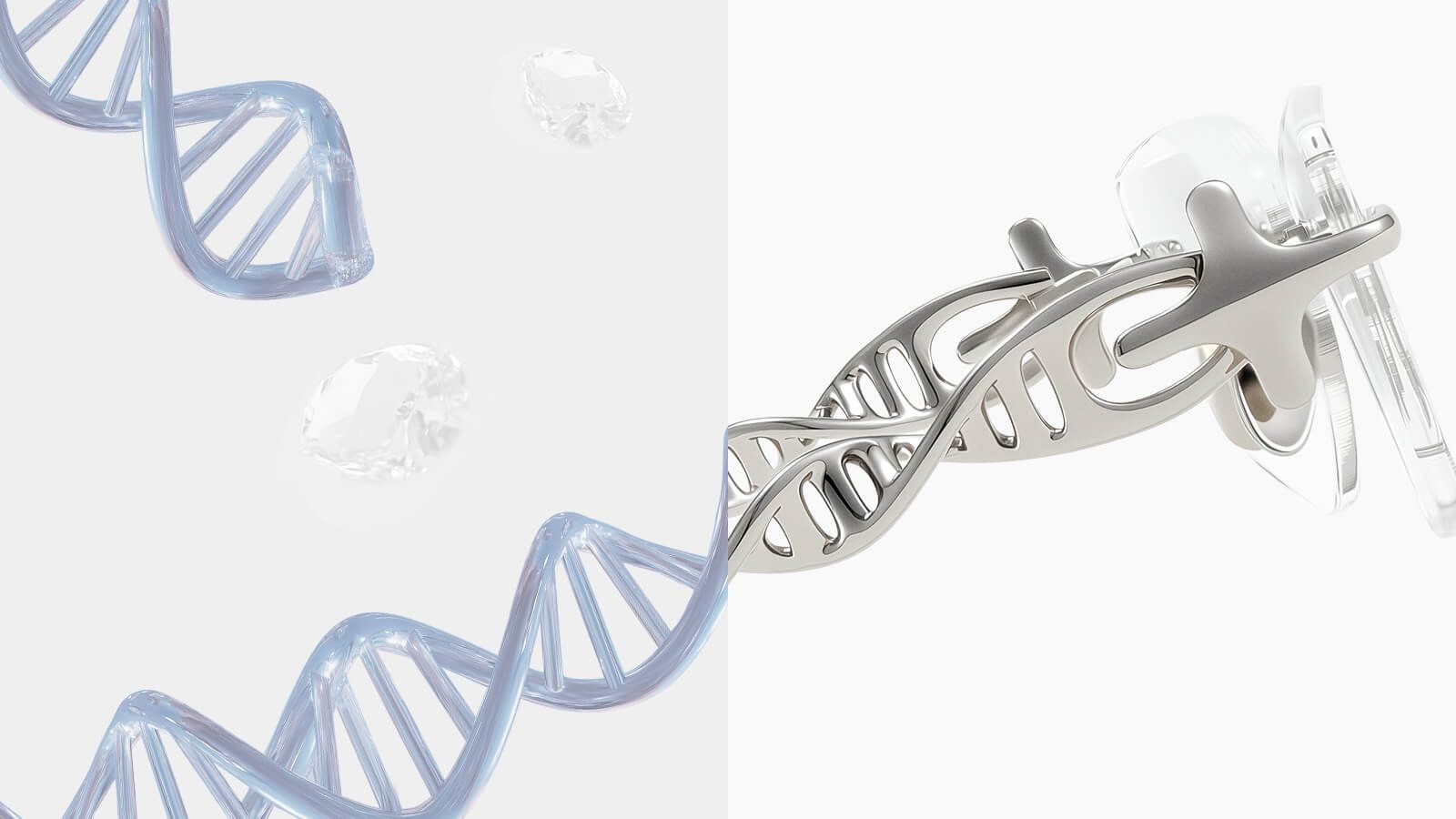
Decode the Form: Inspect The Helix Structure >>
The Geo-Brutalist Approach: The Geologist
The Geologist goes the opposite direction. Where The Decoder pursues lightness and transparency, The Geologist embraces weight and texture.
Run your fingers along the frame and you feel something closer to stone than plastic. The surface mimics mineral formations—the way crystals aggregate, how igneous rock develops its rough texture. This isn't just visual texture applied as a finish. The material itself has this quality throughout, similar to how granite looks the way it does because of its crystalline composition.
Brutalism in architecture refused to hide structure behind smooth facades. Concrete stayed concrete. Steel stayed steel. The Geologist takes the same approach. These frames don't try to soften or flatter. They announce their material presence exactly the way a brutalist building announces its structural system.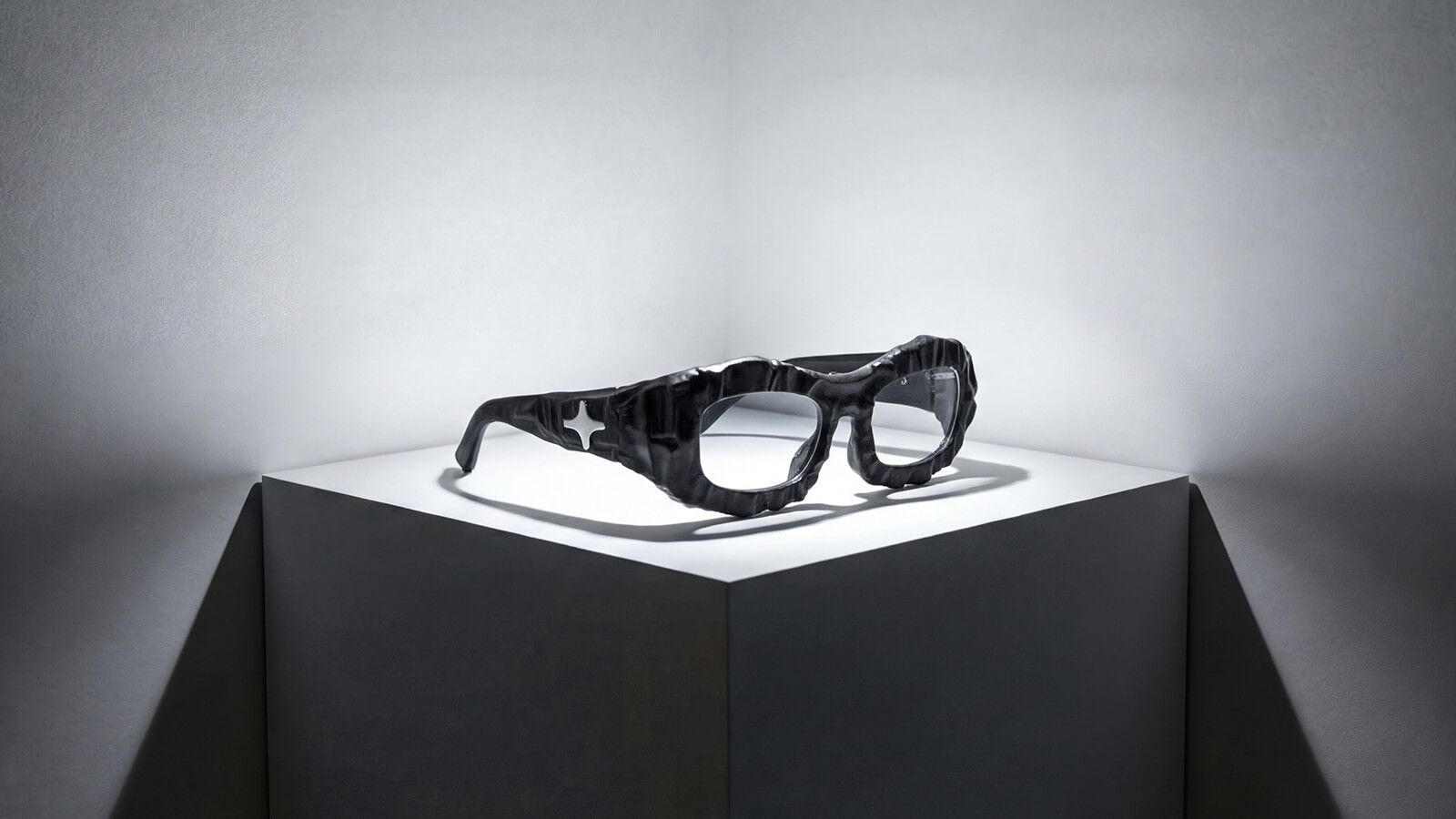
Brutalist Aesthetics in Acetate: Acquire the Piece >>
Why People Are Collecting Design, Not Logos
People buy them because they recognize genuine design innovation. The question isn't "which brand should I wear to signal status?" It's "which design language connects to how I think about form and material?"
The Decoder appeals to anyone interested in bio-design, organic computation, or parametric architecture. The Geologist speaks to collectors who care about brutalism, materiality, and honest construction. Neither frame requires you to know anything about fashion trends or streetwear hype cycles.
Both frames cost $89-$95, which changes the equation entirely. You're not paying a luxury markup for brand heritage or marketing budgets. You're paying for the actual design thinking and material innovation. This makes experimental design accessible to a much wider group while maintaining the intellectual rigor that makes it worth taking seriously.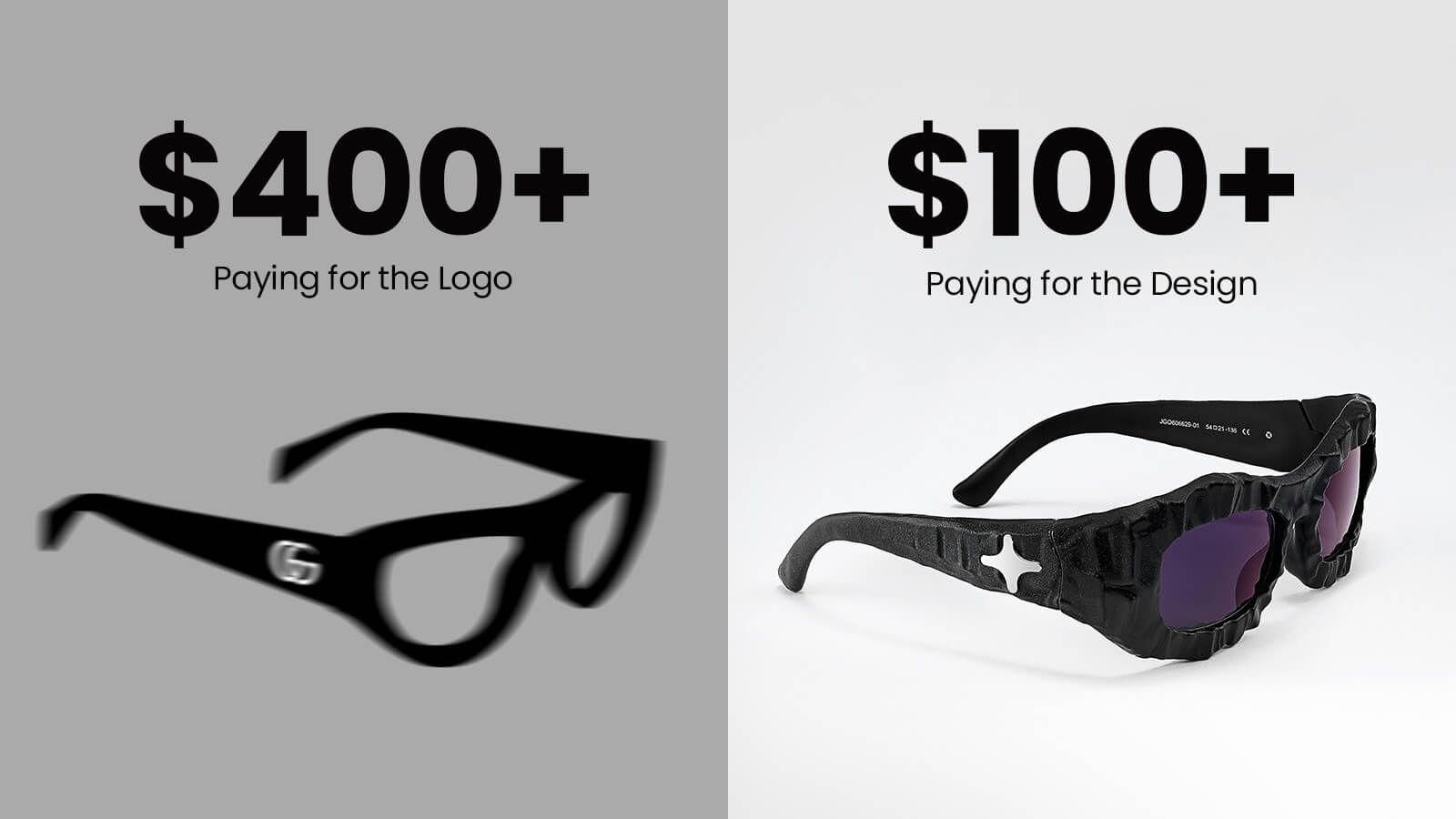
Who Actually Buys This Stuff???
Experimental eyewear attracts a specific type of person. They're not impulse buying because they need new prescription glasses. They're making considered purchases the same way they'd acquire a piece of furniture from a specific designer or art from a particular gallery.
This layered accessibility distinguishes real experimental design from stuff that's just weird for attention. The frames don't require expertise to appreciate, but they reveal more depth the more you understand. You can engage at whatever level makes sense for you.
Collect the Piece
The Vision Tools: Hypothesis collection includes The Decoder and The Geologist plus three other frames for a total of 5, each exploring different structural and material approaches. Together they represent a philosophical concept that treats eyewear as opportunity: what happens when biological systems, geological processes, and architectural thinking inform objects we wear daily?
Browse the complete Vision Tools collection and see what happens when designers stop asking "what should glasses look like?" and start asking "what could they become?"
Learn More about Vooglam x TOMBOGO Eyewear Collab:
Vooglam X TOMBOGO | The Frames Spotted at NYFW >
Inside the Lab: Untold Stories Behind the Vooglam X TOMBOGO Frames >
Elevating Your Office Look: Why Creative Professionals Need Statement Eyewear >
Streetwear Fashion’s Next Big Thing: Functional Eyewear With an Edge >
Why 2026 is the Year of Independent Eyewear Collaborations >
The Best Streetwear Sunglasses & Glasses of 2026 (Vooglam's Editor's Picks) >

Vooglam Blog
Vooglam blog shares professional knowledge about eyeglass frames, lenses, etc., and provides help when purchasing and using eyewear products. At the same time, Vooglam focuses on fashion glasses to interpret the trend of glasses for you.