
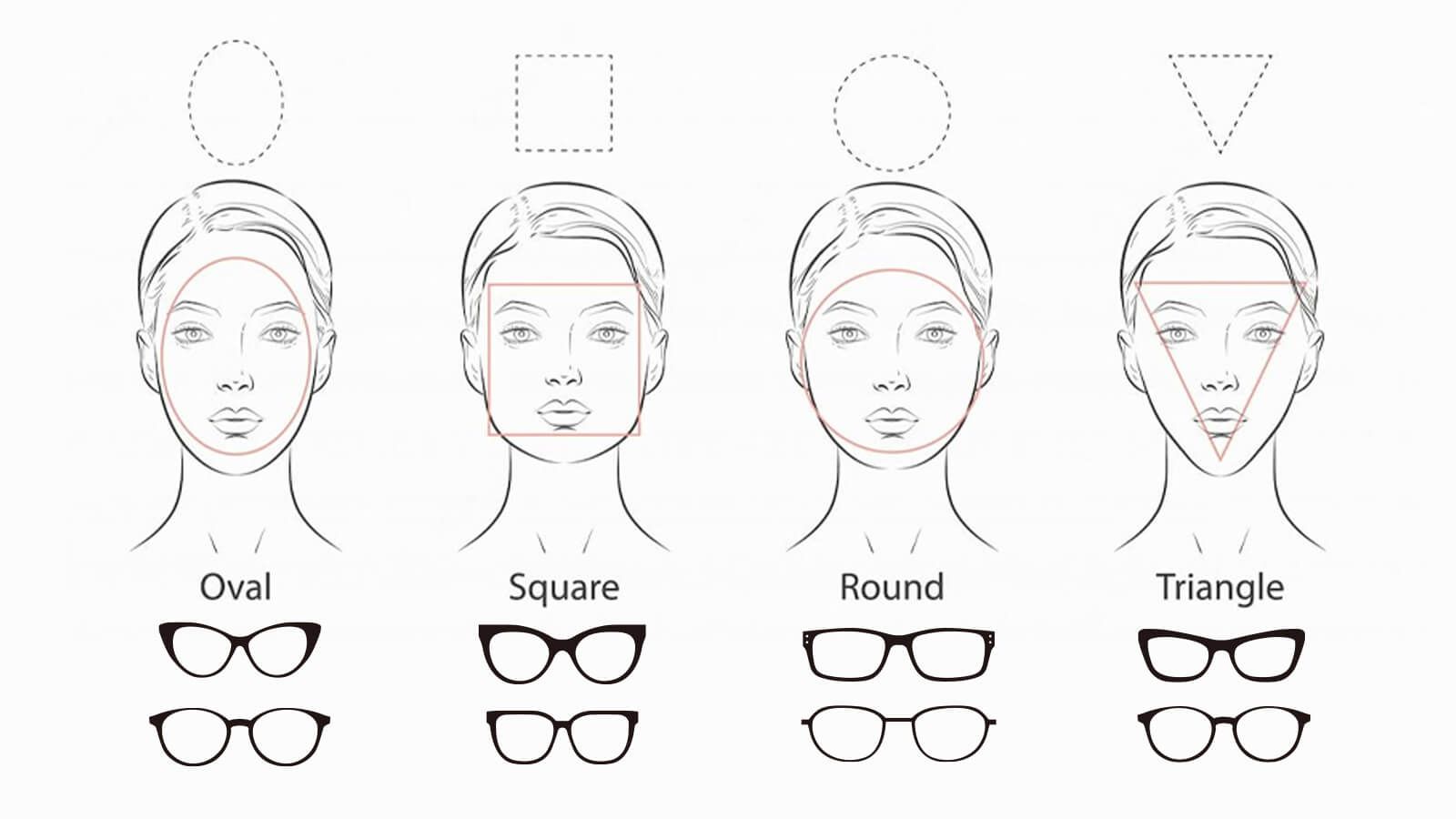
Guide to Picking Glasses That Suit Your Face Shape Perfectly
February 27,2023
What is Boho Style? A Comprehensive Guide to Boho-Chic Fashion
February 13,2025
Virtual Glasses Try On - Find Your Perfect Pair Online
April 02,2024
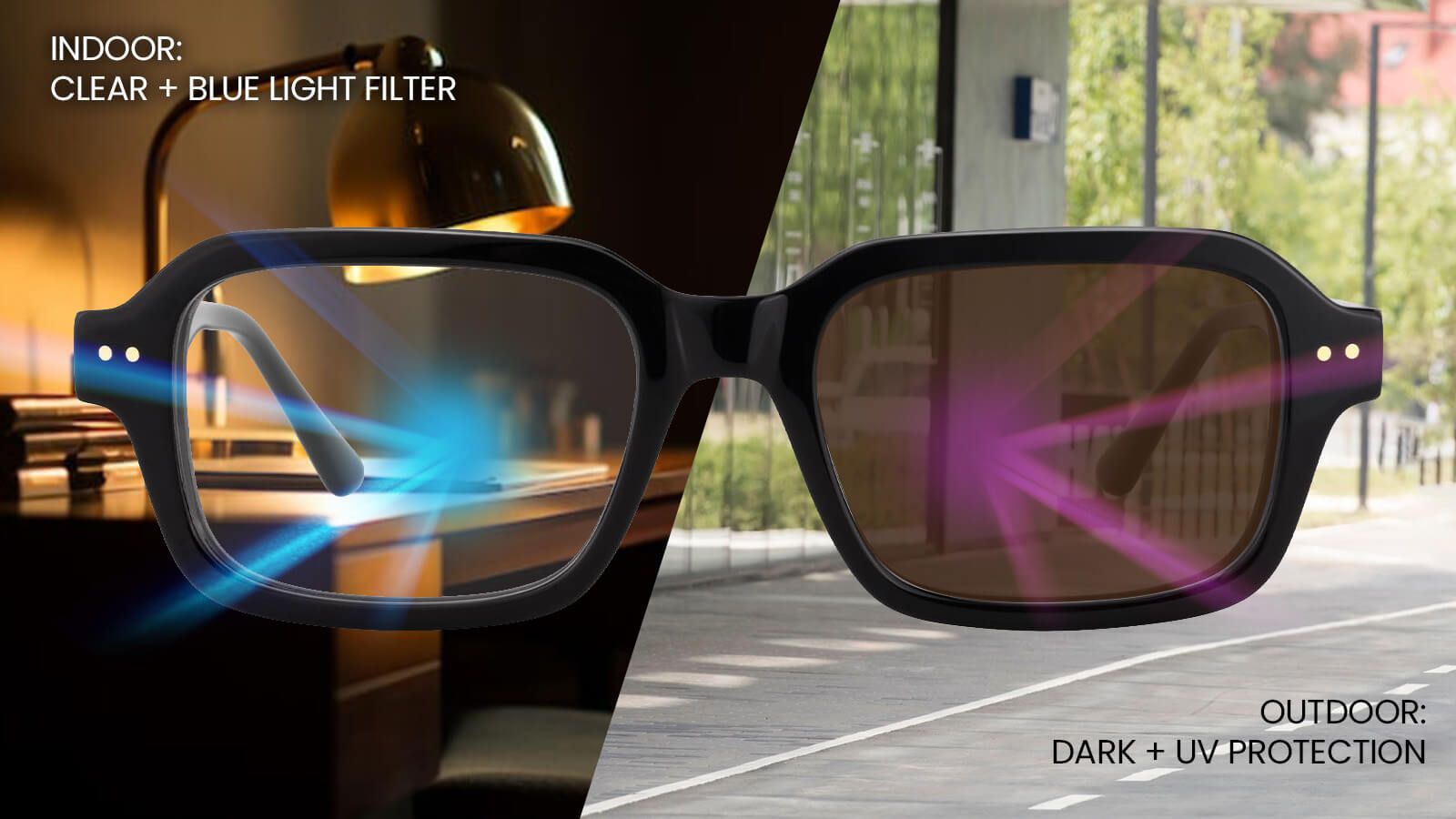
UV Protection vs. Blue Light Glasses: Understanding the Core Differences
July 20,2023

The Ultimate Guide to Modern Trendy Men's Glasses: Top Styles for 2026
March 01,2024
Stylish Reading Glasses: Blending Fashion with Functionality
February 16,2023
Photochromic Lenses 101: How They Work & Why You Need Them
September 22,2023
Brown Eyes: The Beauty of the Most Common Hue
September 01,2024

Best Glasses for Round Faces and Fuller Cheeks
August 02,2023

What are prisms in eyeglasses?
March 20,2023
What Are Bifocal Glasses? The Complete Guide (Types, History & Benefits)
April 14,2023

How to Read Your Eyeglass Prescription?
March 11,2023
What Are Polarized Sunglasses? (And Do You Really Need Them?)
By Vooglam
Share this article

You know the feeling. You’re driving down the highway after a rainstorm, the sun hits the wet asphalt, and suddenly—wham. A harsh, white shine blinds you.
Even if you’re wearing sunglasses, you find yourself squinting.
Why didn’t your shades help? Because you were likely wearing standard non-polarized sunglasses rather than polarized lenses.
At Vooglam, we don't think you need a physics degree to buy a pair of glasses. But we also know that understanding the tech helps you make the right choice. Here is the honest truth about what polarized lenses actually do, when you need them, and—crucially—when you don't.
- How Do Polarized Lenses Work? (The Science of Glare)
- Polarized vs. Non-Polarized Sunglasses: The Real Difference
- Types of Polarized Lenses: Colors & Categories
- The Top 3 Benefits of Polarized Sunglasses
- Who Should Not Wear Polarized Sunglasses?
- How to Know If Sunglasses Are Polarized (The Screen Test)
- Conclusion: Are Polarized Sunglasses Worth It?
- FAQ: Common Questions About Polarized Lenses
How Do Polarized Lenses Work? (The Science of Glare)
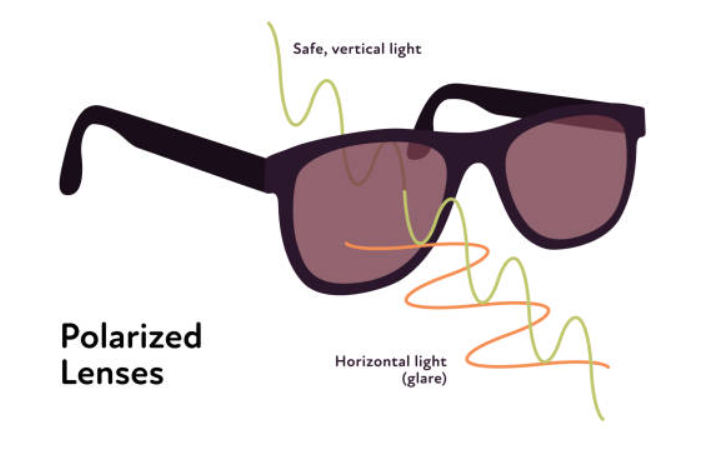
To understand why these lenses cost a little more, you have to understand what glare actually is.
When sunlight comes down from the sky, it scatters everywhere. But when it hits a flat, shiny surface—like a car hood, a calm lake, or a snowy hill—it organizes itself. It reflects horizontally, creating a concentrated blast of light that we call glare.
Standard sunglasses act like a sheer curtain. They make everything darker, including the glare, but they don't stop it.
Polarized lenses act like microscopic Venetian blinds.
They have a special chemical filter aligned vertically. This filter acts like a bouncer: it opens the door for useful vertical light (so you can see details and colors) but slams the door on that nasty horizontal light (the glare).
Polarized vs. Non-Polarized Sunglasses: The Real Difference

This is the most common confusion we see. Users often ask, "If I just get really dark lenses, won't that stop the glare?"
The short answer is: No.
When comparing polarized vs non-polarized sunglasses, the main difference isn't about darkness—it's about the mechanism.
- Non-Polarized Sunglasses (Tinted): Think of these like turning down the brightness on your phone. They reduce the overall intensity of light. They are great for general comfort, but if you look at a shiny lake, you’ll just see a darker version of the white reflection.
- Polarized Sunglasses: These are selective. They strip away the reflection so you can see what’s underneath.
| Feature | Non-Polarized (Standard Tint) | Polarized Lenses |
| What they do | Dim light equally. | Block reflected glare specifically. |
| Best For | Fashion, checking phones, and overcast days. | Driving, water sports, snow, and bright beach days. |
| The Vibe | "The world is darker." | "The world is sharper." |
Looking for the upgrade? Check out our collection of Polarized Lenses to see the difference for yourself.
Types of Polarized Lenses: Colors & Categories
Not all polarized lenses are created equal. You need to consider two things: the Color (how it filters contrast) and the Category (how dark it is).
1. Which Color Do You Need?
- Grey Lenses (True Color): The most popular choice. They reduce brightness without changing the natural colors of the world. Great for general driving and sunny days.
- Brown / Amber Lenses (High Contrast): These add a warm tone that helps you spot details. Excellent for golfing (spotting the ball), fishing (shallow water), or driving on cloudy days.
- Yellow / Rose Lenses (Low Light): Best for dawn, dusk, or foggy conditions. They brighten up the world while still cutting glare.
2. Understanding "Categories" (How Dark Are They?)
Did you know sunglasses are rated by darkness? This is called the Filter Category.
- Category 0-1 (Light Tint): Mostly for fashion or indoor use.
- Category 2 (Medium Tint): Good for partially cloudy days.
- Category 3 (Dark Tint): The Standard. Most quality polarized sunglasses fall here. Perfect for bright sunny days, beach days, and driving.
- Category 4 (Very Dark): Designed for high-altitude mountaineering or glaciers.
Warning: Category 4 lenses are too dark for driving. If you buy "glacier glasses," do not wear them behind the wheel.
The Top 3 Benefits of Polarized Sunglasses
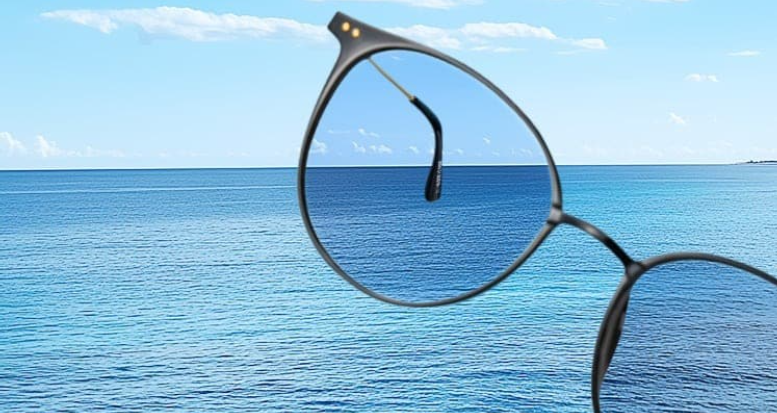
Why do so many drivers and outdoor enthusiasts swear by them? It comes down to three specific advantages.
1. Seeing "Through" the Glare
Ever look at a river and only see the sky reflecting off the top? Polarized lenses cut that reflection, letting you see through the surface to the rocks or fish below. It’s the same for driving—that white sheen on your windshield vanishes, letting you see the road clearly.
2. Reduced Eye Strain
When you fight glare, your eyes naturally squint to compensate. Do that for a two-hour drive, and you end up with eye fatigue or a headache. Polarization allows your eyes to relax because they aren't fighting the "noise" of the light.
3. Richer Color and Contrast
Glare washes out the world, turning green grass and blue skies into a hazy white mess. When you remove the glare, you get richer contrast and deeper colors.
Who Should Not Wear Polarized Sunglasses?

We aren't going to lie to you just to sell a pair of frames. Polarized lenses aren't perfect for everyone. There are specific scenarios where non-polarized sunglasses might actually be the better choice.
- LCD Screens: Most digital screens (smartphones, car dashboards, and GPS units) use polarizing filters to work. If you look at your phone through polarized glasses, the screen might look rainbow-colored or go completely black.
- Pilots: Because of the screen issue mentioned above, and the need to spot glinting sunlight off other aircraft, pilots are generally advised not to wear them.
- Winter Drivers (Icy Roads): Sometimes, glare is a safety feature. If there is black ice on the road, the "shine" warns you it's there. Polarized lenses kill the shine, making ice look like dry pavement.
How to Know If Sunglasses Are Polarized (The Screen Test)
Not sure if your current pair is polarized? You don't need a lab to find out. You can do a simple test right now using your computer or phone screen.
- Turn on your screen to a bright white background.
- Hold your sunglasses in front of the screen.
- Slowly rotate the sunglasses 90 degrees.
If the lenses turn dark or black as you rotate them, they are polarized. If they stay the same color, they are just non-polarized (tinted).
More test methods in the complete guide: How to Know If Sunglasses Are Polarized
Conclusion: Are Polarized Sunglasses Worth It?
If you want to stop squinting and see the world in high definition, polarized lenses are worth every penny.
But remember, you don't have to choose between "looking cool" and "seeing well." You can add polarized lenses to almost any of our trendy frames.
- Hate swapping between indoors and outdoors? You might prefer Photochromic Lenses (like Transitions®) instead.
- Still deciding? Read our comparison of Photochromic Sunglasses vs. Polarized.
Ready to find your look? Shop Vooglam’s Polarized Collection.
FAQ: Common Questions About Polarized Lenses
What is the difference between polarized and tinted sunglasses?
The difference is how they handle light, not how they protect your eyes.
- Protection (Both): Quality sunglasses—whether polarized or just tinted—should block 100% of UVA and UVB rays. They are both safe for your eyes.
- Visuals ( The Difference): Tinted sunglasses act like a dimmer switch; they turn down the overall brightness but don't stop the shiny reflections. Polarized sunglasses have a special filter that actively blocks horizontal glare (the shine off water or roads).
If you just want to dim the sun, tinted is fine. If you want to eliminate blinding glare, you need polarized.
Is it better to have polarized sunglasses?
For most active lifestyles, yes. When deciding between polarized vs non-polarized sunglasses for driving, fishing, or beach days, polarized is visually superior. However, for reading phone screens outdoors, non-polarized is better.
Which is better: Polarized or UV Protection?
This is the most important question here. They are two completely different things.
- UV Protection is a health requirement (sunscreen for your eyes).
- Polarization is a comfort feature (noise-cancelling).
You can have polarized lenses without UV protection (bad idea), and UV protection without polarization (very common). At Vooglam, we ensure our lenses keep your eyes safe, but always check the label for "100% UVA/UVB Protection" regardless of polarization.
Is it bad if my sunglasses are not polarized?
Not at all! "Non-polarized" does not mean "bad." As long as your sunglasses have UV protection, your eyes are safe. You are just missing out on the glare-reduction feature.
Why can't you drive with polarized sunglasses?
Actually, you can and should drive with them—they are excellent for reducing road glare. The myth that you "can't" comes from the fact that they can sometimes make digital dashboards (like in a Prius or Tesla) harder to read.
Why are high-end sunglasses sometimes not polarized?
Sometimes it's a style choice. Some luxury brands prioritize specific gradient tints that look amazing but are hard to polarize. Other times, it's for clarity—brands designing glasses for pilots or golf pros might skip polarization intentionally so the user can read instruments or read the "grain" of the grass.

Vooglam Blog
Vooglam blog shares professional knowledge about eyeglass frames, lenses, etc., and provides help when purchasing and using eyewear products. At the same time, Vooglam focuses on fashion glasses to interpret the trend of glasses for you.
The Funnel-Neck Dilemma: How to Prevents Facial Crowding with Oversized Coats and Layered Knits

Vooglam
Solves autumn/winter facial crowding caused by funnel-neck coats and turtleneck knits using Vooglam high-bridge, double-bridge aviators, lightweight TR90, and champagne acetate frames.
September 16,2026
The Half-Rimless Revival: What's New for 2026
Vooglam
Explores the 2026 half-rimless and rimless eyewear revival inspired by 90s minimalism and Office Siren style. Features Vooglam's Niseko wave metal and Kairo acetate browline glasses.
September 15,2026
2026 Fall/Winter Modern Classics: The 90s Urban Revival & The Eyewear Architecture of Timeless Power
Vooglam
Explores 2026 fall/winter eyewear trends blending 90s urban minimalism with modern power tailoring. Features Vooglam metal, titanium, and marble acetate frames for premium commuting.
September 09,2026
Dark Lens vs Light Lens: Which Is Right for You?
Vooglam
More Than Just Sun ProtectionSunglasses are no longer chosen only by the weather. Lens tint can hide tired eyes, change your expression, or become the focus of an outfit.The dark lens vs light lens de
August 20,2026