
You love your contact lenses because they give you freedom. You don't have to worry about frames sliding down your nose or losing your peripheral vision.
But if you work in front of a computer all day, you likely know the downside: The burn. By 2 PM, your contacts feel like sandpaper, your eyes are red, and you are counting the minutes until you can peel them off.
This leads to a very common question: Can you wear blue light glasses over your contacts? And if you do, will looking through two lenses distort your vision?
The Short Answer: Yes, You Can (and Probably Should)
Yes, you can wear blue light glasses with contact lenses. In fact, for many daily contact wearers, this combination is the "secret weapon" for surviving a long workday.
Here is the optical setup:
- Your Contact Lenses: Do the heavy lifting of correcting your vision (nearsightedness, farsightedness, or astigmatism).
- The Blue Light Glasses: Act as a specialized shield. They filter out the high-energy blue light from your screen and reduce glare.
Since your contacts are already correcting your vision, you do not need a prescription for the glasses. You simply need "Plano" lenses (optical-grade lenses with zero magnification power), which act purely as filters without interfering with your contacts.
Why Contact Lens Wearers Need Them More Than Anyone
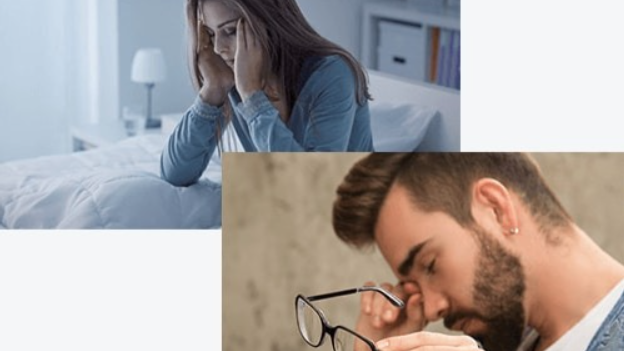
Digital eye strain affects everyone, but contact lens wearers feel it twice as fast.
- The "Blink Rate" Problem When we stare at digital screens, studies show our blink rate drops significantly—often from about 15 times a minute to just 5 or 6 times. Blinking is the only way your eyes stay hydrated and clean.
- The "Double Dryness" Effect Contact lenses are like sponges; they rely on a constant layer of tears to float comfortably. When you blink less often, the tear film evaporates. This is why your contacts feel tight and gritty after a few hours of Zoom calls.
How Glasses Help: Wearing non-prescription frames creates a "humidity chamber" effect.
- Physical Barrier: It sounds simple, but glasses act as a windshield. They block air drafts (from office AC or ceiling fans) that speed up moisture evaporation from your contact lenses.
- Visual Comfort: By filtering out blue light, the glasses increase screen contrast. This allows your eyes to relax, helping maintain a more natural blink rate than when squinting at a harsh white background.
Do I Need a Prescription for the Glasses?
This is the most confusing part of buying online. If you have a prescription for your contacts, do you need to enter it for the glasses?
No. If you plan to wear the glasses while wearing your contacts, you should select Non-Prescription (Plano) lenses at checkout. Your contacts are already doing the work of focusing.
The "Hybrid" Strategy. However, you might want a second pair with your actual prescription for the evenings. Once you take your contacts out, you still need to see. If you are curious about how the numbers differ between the two, check out our guide on whether glasses and contact prescriptions are the same. It is optically impossible to use the exact same numbers for both, so if you do want prescription glasses, make sure you know how to convert your glasses prescription to contact lenses (or vice versa) correctly.
3 Tips for Wearing Glasses Over Contacts

If you decide to try this combo, here are three tips to ensure optical clarity:
- Anti-Reflective Coating is Mandatory: When you look through a contact lens AND a spectacle lens, you have multiple surfaces that can catch reflections. Ensure your blue light glasses have a high-quality Anti-Reflective (AR) coating. Without it, you might experience "double glare," which defeats the purpose.
- Go Lightweight: Since you aren't used to wearing frames (that's why you chose contacts, right?), heavy acetate glasses will feel annoying very quickly. Look for frames made of TR90 or Titanium, which are so light you might forget you are wearing them.
- What About Blue Light Contacts? Some newer contact lenses claim to block blue light. While these exist, glasses offer a distinct advantage: you can take them off. If you want to step away from the screen and see the world with complete color accuracy, you just remove the glasses. For a full breakdown of the lifestyle differences, read our comparison of contacts vs. glasses.
Conclusion: The Best of Both Worlds
You don't have to choose between the freedom of contacts and the protection of glasses. By pairing your contacts with a stylish pair of Plano blue light frames, you create a barrier against dry air and harsh light.
It is a simple adjustment to your routine that can make your 9-to-5 significantly more comfortable.